The Principle of AGC System in Strip Rolling
Dec . 23, 2025 21:20
Back to list
The Principle of AGC System in Strip Rolling
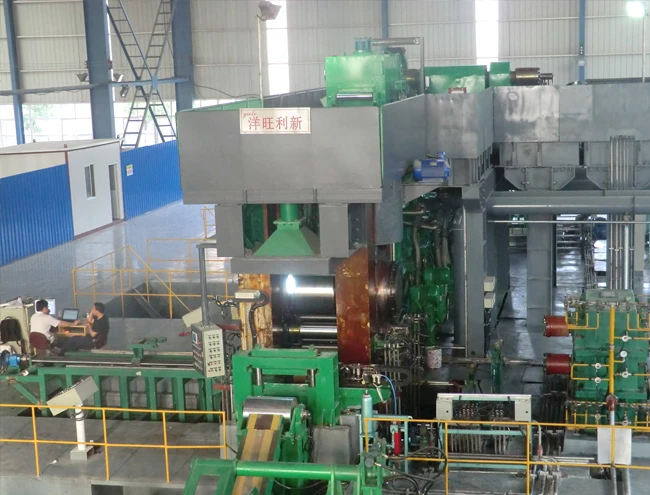
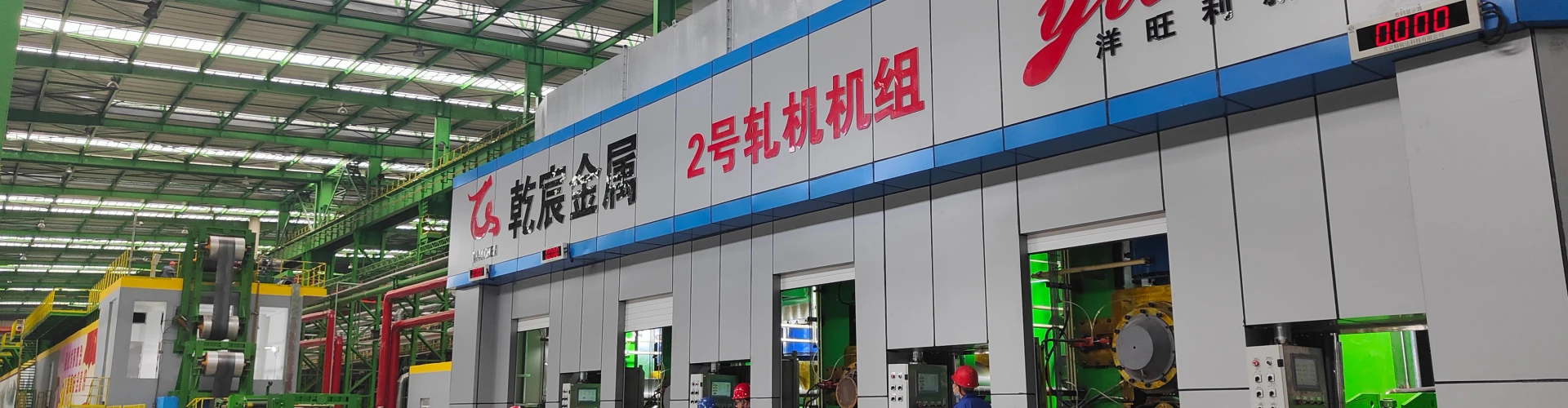
In the iron, steel, and non-ferrous metallurgical rolling industry, the precision of strip gauge directly determines the quality and market competitiveness of products. The agc system (Automatic Gauge Control System), as a core device to improve rolling precision, has become an indispensable part of the strip rolling process. Automatic gauge control system realizes real-time monitoring and adjustment of strip thickness through intelligent control logic, ensuring stable and precise gauge during mass production. Agc controller, as the "brain" of the system, is responsible for processing signals and issuing control commands, which is crucial to the control effect. Beijing Yang Wang Li Xin Sci&Tech Co.,Ltd. (YWLX), established in 2003, is a preeminent professional turn-key project provider specializing in metallurgical rolling machinery for the iron, steel, and non-ferrous industries. Since its establishment, YWLX has been committed to the research and development of complete agc system equipment. With the invaluable expertise of its founder Dr. Yang (former department head at the China Top Iron & Steel Research Institute) and the team, YWLX has become a pioneering figure in China's steel rolling field. Its agc system has been applied to hundreds of cold/hot rolling mills, temper mills, and skin pass mills at home and abroad, achieving precise control of strip gauge.
Basic Principle And Core Components Of AGC System
-
Core Principle: The core of agc system is to realize closed-loop control of strip gauge. It first collects the actual thickness signal of the strip through detection equipment, then compares it with the preset target thickness through the agc controller, calculates the deviation, and finally adjusts the rolling process parameters (such as roll gap, rolling force, or rolling speed) in real time to eliminate the thickness deviation. This closed-loop control logic ensures that the strip gauge is always kept within the allowable error range during the rolling process.
-
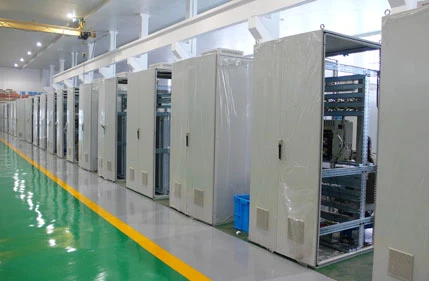
Key Components: The automatic gauge control system is composed of three core modules: detection unit, control unit, and execution unit. The detection unit (such as thickness gauge) is responsible for collecting real-time thickness data; the agc controller is the core, which uses advanced control algorithms (such as PID control, fuzzy control) to process data and generate control signals; the execution unit (such as hydraulic cylinder, servo motor) adjusts the rolling parameters according to the control signals to complete the thickness correction.
-
Control Logic Advantage: YWLX's agc system optimizes the control logic based on years of rolling experience. Its agc controller can not only respond to steady-state thickness deviations but also predict and compensate for dynamic deviations caused by factors such as changes in incoming material thickness and rolling speed, further improving control precision and stability.
-
Signal Processing Efficiency: The agc controller of YWLX's automatic gauge control system has high-speed signal processing capability, with a response time of less than 5ms. It can quickly process the thickness signal collected by the detection unit and issue adjustment commands, ensuring that the thickness deviation is eliminated in time before the unqualified strip is produced in large quantities.
Classification And Application Scenarios Of AGC System
|
AGC System Type
|
Core Control Strategy
|
Applicable Rolling Mills
|
Application Effect Of YWLX AGC System
|
|
Roll Gap AGC System
|
Adjust the roll gap through the hydraulic cylinder to change the rolling reduction, thereby controlling the strip thickness; the agc controller precisely controls the hydraulic cylinder displacement
|
Hot rolling mills, cold rolling mills (thick strip rolling)
|
Gauge control precision reaches ±0.01mm; stable operation under high-temperature and high-load conditions; applied to over 100 hot rolling mills at home and abroad
|
|
Rolling Force AGC System
|
Maintain constant rolling force by adjusting rolling speed or roll gap; avoid thickness changes caused by rolling force fluctuations
|
Temper mills, skin pass mills (thin strip finishing)
|
Effectively reduce gauge fluctuation caused by material hardness difference; ensure uniform strip mechanical properties; widely used in automotive sheet and electrical steel rolling lines
|
|
Speed AGC System
|
Adjust the speed difference between the front and rear stands to control the tension, thereby affecting the strip thickness; suitable for continuous rolling mills
|
Continuous cold rolling mills, continuous hot rolling mills
|
Realize coordinated control of multi-stand rolling; reduce inter-stand tension fluctuation; improve overall strip gauge uniformity; support high-speed rolling (up to 1200m/min)
|
|
Hybrid AGC System
|
Integrate roll gap, rolling force, and speed control strategies; the agc controller dynamically selects the optimal control mode according to working conditions
|
Complex rolling scenarios (such as variable-thickness strip rolling)
|
Strong adaptability to working conditions; can handle sudden changes in incoming material thickness; applied to special steel rolling lines with high precision requirements
|
Key Advantages Of YWLX AGC System And AGC Controller
As a core technology of YWLX, its agc system has obvious advantages in precision, stability, and adaptability, which is inseparable from the advanced design of the agc controller and the rich engineering experience of the team. Firstly, in terms of control precision, YWLX's automatic gauge control system adopts self-developed advanced control algorithms, which can effectively suppress the interference of external factors (such as temperature changes, material inhomogeneity) on the strip thickness, and the gauge control precision reaches ±0.01mm, which is at the leading level in the industry. Secondly, in terms of stability, the agc controller is equipped with a redundant design, which can ensure continuous operation of the system even if a single component fails, avoiding production interruption. At the same time, the system has a perfect fault diagnosis function, which can timely alarm and locate faults, reducing maintenance time. Thirdly, in terms of adaptability, YWLX's agc system can be customized according to the type of rolling mill (hot rolling, cold rolling, temper mill) and the characteristics of the rolled material (steel, non-ferrous metals), and can be seamlessly integrated with the existing rolling line equipment. In addition, relying on the team's expertise in rolling processes, YWLX provides comprehensive technical support, including system debugging, operator training, and after-sales maintenance, ensuring that the agc system exerts the best performance in actual production.
Importance Of AGC System In Strip Rolling Industry
-
Improve Product Quality: The agc system ensures the uniformity and precision of strip gauge, avoiding quality defects such as uneven thickness and over-tolerance. High-quality strips can meet the requirements of high-end applications (such as automotive, electrical, and aerospace), improving the market competitiveness of enterprises. YWLX's automatic gauge control system has helped many customers improve product qualification rate by more than 5%.
-
Reduce Production Costs: By precisely controlling the strip gauge, the agc system can reduce the excessive rolling margin, saving raw material consumption. At the same time, it reduces the number of unqualified products, avoiding the waste of energy and labor in reprocessing. For large-scale rolling enterprises, the annual cost saving can reach millions of yuan.
-
Realize Automated Production: The agc system realizes the automatic control of the rolling process, reducing the dependence on manual operation. The agc controller can automatically adjust parameters according to working conditions, improving production efficiency and reducing human errors. This is an important part of the intelligent transformation of the metallurgical rolling industry.
-
Enhance Production Stability: The automatic gauge control system can quickly respond to various interference factors in the rolling process, maintaining the stability of the rolling process. Stable production not only improves the service life of rolling equipment but also ensures the continuity of mass production, meeting the large-scale demand of the market.
AGC System FAQs
What Factors Will Affect The Control Precision Of AGC System
The control precision of agc system is mainly affected by four factors: first, the accuracy of the detection unit (thickness gauge) – inaccurate thickness signals will lead to wrong control decisions; second, the response speed of the agc controller – slow signal processing will cause delayed adjustment and affect precision; third, the stability of the execution unit (hydraulic cylinder, servo motor) – unstable execution will lead to fluctuations in rolling parameters; fourth, external interference (such as temperature changes, material hardness differences). YWLX's automatic gauge control system optimizes these links through advanced technology, ensuring high precision even under complex working conditions.
Can AGC System Be Retrograded To The Existing Rolling Mill
Yes, YWLX's agc system supports retrofitting to existing rolling mills. The company's professional team will first conduct a comprehensive investigation of the existing rolling mill's structure, control system, and working conditions, then design a customized retrofitting scheme. The agc controller can be seamlessly connected with the existing electrical control system, and the execution unit can be installed and modified on the basis of the original equipment. The retrofitting process will not affect the normal production schedule too much, and after retrofitting, the rolling precision can be significantly improved, which has a high cost-performance ratio.
How To Ensure The Stable Operation Of AGC Controller In Long-Term Use
To ensure the stable operation of agc controller in long-term use, the following points should be noted: first, regular maintenance – clean the controller's cooling system and connection terminals to avoid dust accumulation and poor contact; second, parameter backup – regularly back up the controller's control parameters to prevent parameter loss due to faults; third, environment control – place the controller in a dry, ventilated, and temperature-stable environment to avoid the impact of high temperature, humidity, and electromagnetic interference; fourth, regular system inspection – YWLX provides regular on-site inspection services to detect and eliminate potential faults of the agc controller in time.
Is There A Difference In The Principle Of AGC System Between Hot Rolling And Cold Rolling
The core principle of agc system (closed-loop control of thickness deviation) is the same for hot rolling and cold rolling, but there are differences in control strategies due to different working conditions. In hot rolling, the strip temperature is high, and the material properties change greatly, so the agc system pays more attention to the compensation of temperature-related deviations, and often adopts the roll gap AGC mode with strong anti-interference ability. In cold rolling, the strip thickness is thinner, and the precision requirement is higher, so the automatic gauge control system often adopts the hybrid AGC mode integrating roll gap and tension control to ensure uniform thickness. YWLX can provide targeted agc system solutions according to hot rolling and cold rolling scenarios.
What Technical Support Does YWLX Provide For AGC System Users
YWLX provides comprehensive technical support for agc system users, including: first, pre-sales consultation – professional team provides technical solutions according to user's rolling mill type and production requirements; second, on-site installation and commissioning – ensure the system is correctly installed and debugged to reach the best control effect; third, operator training – conduct systematic training on the use, parameter adjustment, and daily maintenance of the agc controller and automatic gauge control system; fourth, after-sales maintenance – 24-hour technical support hotline, and on-site maintenance services to solve faults in time; fifth, system upgrade – provide system software and hardware upgrade services according to user's production needs and technological progress.
Latest news
-
Ship Multi-Project Equipment on the Lantern FestivalNewsMar.03,2026
-
YWLX Deep Dives into Cladding Line with Dubai ClientNewsDec.22,2025
-
1450mm 6-Hi Reversing Mill Goes Live in BangladeshNewsOct.28,2025
-
Sep. 3rd Parade: Carry Forward and Press OnNewsSep.03,2025
-
Indian Clients Visit YWLX to Inspect Skin-pass MillNewsJun.22,2025
-
Full- throttle! YWLX's Intense Production During May DayNewsMay.01,2025
-
YWLX Participated in the 2025 Chinese GAP Program Review ConferenceNewsApr.17,2025
Related Products