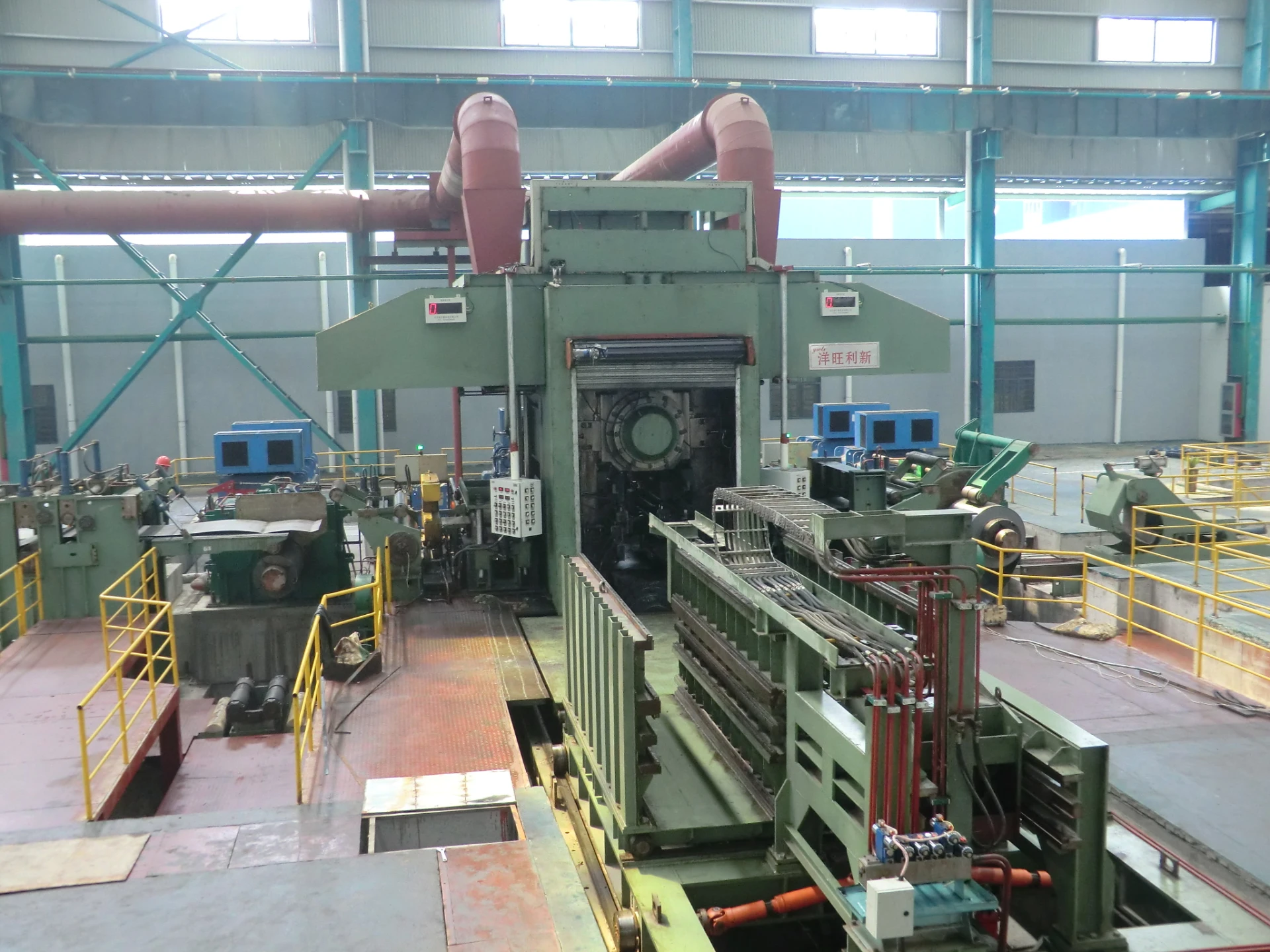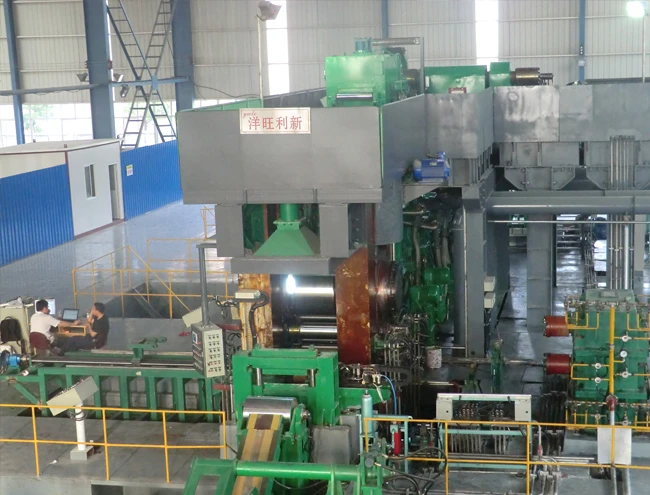

Shape Control Technology and Optimization in the Self-Rolling Process of a Reversible Cold Rolling Mill
The production of high-quality flat-rolled metal products demands exceptional precision in controlling both the thickness and the shape of the strip. In a reversible cold rolling mill, where the strip passes back and forth through the same work rolls to achieve the desired reduction, maintaining optimal shape—a critical indicator of flatness—is a complex and dynamic challenge. The self-rolling process refers to the mill's inherent ability to continuously adjust and optimize its parameters during operation. The integration of advanced shape control technology is, therefore, not an auxiliary function but the very core of an intelligent cold reversing mill, determining the final product quality, mill productivity, and operational yield.
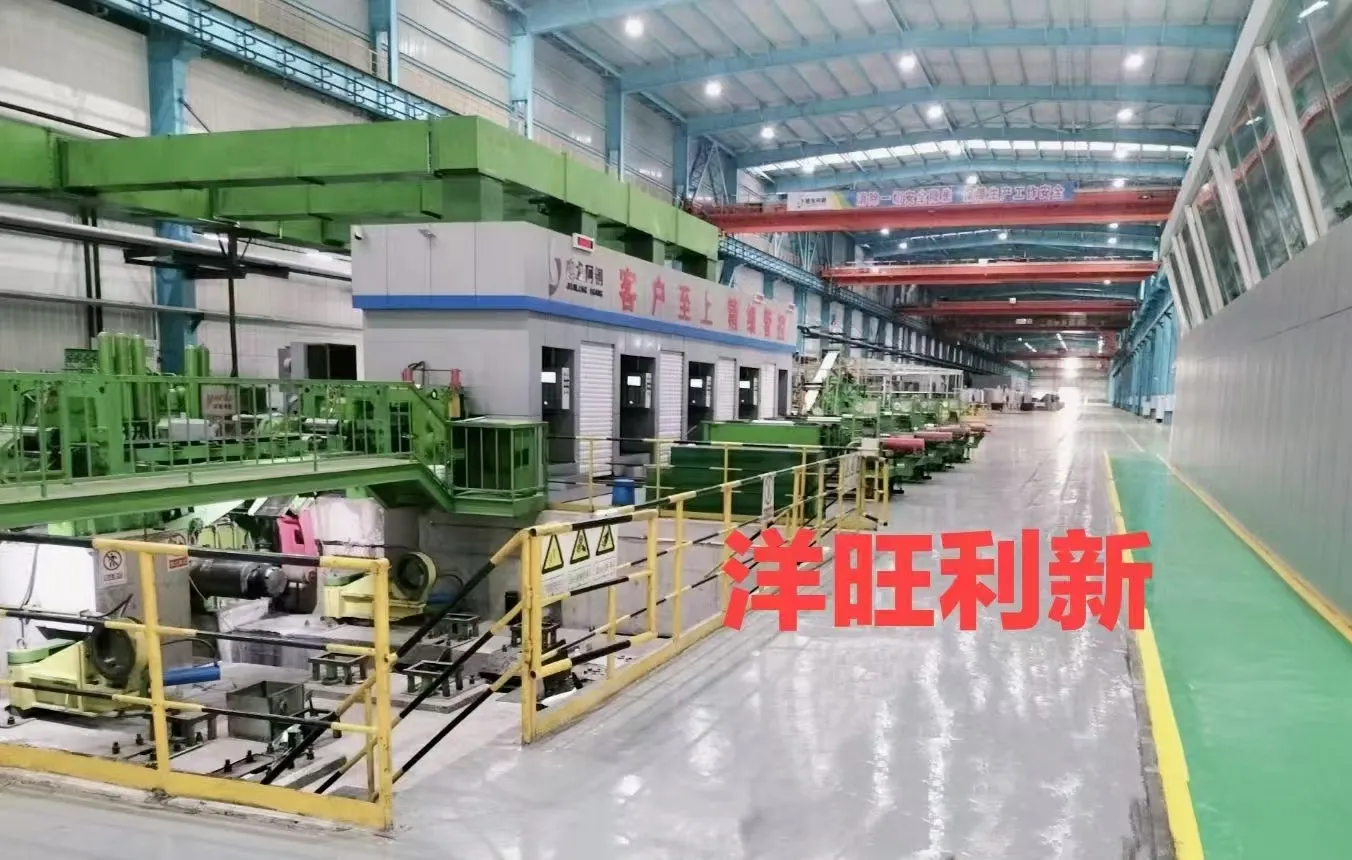
The Criticality of Shape Control in a Reversing Cold Rolling Mill
Shape, or flatness, refers to the uniform distribution of longitudinal tension across the width of the strip. Any deviation from perfect flatness manifests as visible defects such as wavy edges (indicating center buckles) or center buckles (indicating tight edges), which render the material unsuitable for high-precision applications like automotive exterior panels or can manufacturing. The reversing rolling mill environment is particularly susceptible to shape defects due to its transient nature. With each reversing pass, the strip's width, thickness, hardness, and temperature change, constantly shifting the conditions that influence flatness.
Furthermore, the process is influenced by a multitude of interacting factors: thermal crown of the rolls, roll wear, roll bending forces, and the initial profile of the incoming material. Without sophisticated control systems, an operator would be overwhelmed by the task of manually compensating for these variables. Therefore, the implementation of a closed-loop automatic shape control system is what transforms a conventional mill into an intelligent, self-optimizing production unit.
Fundamental Shape Actuators in a Reversible Cold Mill
The mechanical design of a modern reversible cold rolling mill incorporates several dedicated actuators specifically designed to manipulate the gap between the work rolls across the strip width, thereby directly influencing the shape. The primary actuators include:
Work Roll Bending (WRB) is the most rapid and frequently used actuator. It involves applying hydraulic forces to the ends of the work rolls to bend them against their natural stiffness. Positive bending increases the roll crown (making the center of the roll larger than the edges), which corrects loose edges or wavy centers. Negative bending decreases the crown, correcting tight edges or center buckles. Its key advantage is its high speed, allowing for corrections on a short timescale.
Intermediate Roll Bending (IRB) operates on the same principle as WRB but is applied to the intermediate rolls in a 6-high mill configuration. This system provides a more powerful and effective shaping force, especially for wider strips, as it acts on a larger, stiffer roll, offering a broader range of crown control.
Roll Shifting, particularly in 6-high mills, involves axially shifting the intermediate rolls. This technology, often called Intermediate Roll Shift (IRS), dynamically alters the contact pattern between the rolls and the strip. By shifting the rolls, the effective crown of the roll stack can be continuously adjusted, providing a powerful and versatile means to compensate for changes in strip width and rolling force. This is crucial in a reversing rolling mill where strip width may vary significantly between orders.
Controlled Cooling is a slower but vital auxiliary system. Banks of nozzles spray emulsion onto the work rolls in segmented zones across their length. By differentially cooling the rolls, their thermal crown can be managed. For instance, if the strip is exhibiting wavy edges, the cooling can be increased on the roll's edges to contract them, effectively reducing the crown. This system works in concert with the faster mechanical actuators to manage long-term thermal drift.
Reversible Cold Mill: Shape Measurement Roll
The effectiveness of any control system is predicated on accurate and timely feedback. In shape control, this is provided by a Shape Measurement Roll (or Stressometer roll), located typically after the exit tension reel. This segmented roll is instrumented with an array of sensitive sensors (often based on piezoelectric or fiber-optic technology) across its width. Each segment measures the radial force exerted by the strip.
A perfectly flat strip will exert uniform pressure across all segments. Any deviation from flatness creates a non-uniform pressure distribution. For example, a wavy edge will have lower tension and thus exert less force on the edge segments. The control system’s software translates this intricate force map into a detailed shape profile, often displayed to the operator as an I-unit graph, quantifying the deviation from ideal flatness. This real-time data stream is the fundamental input for the automatic shape control loop.
Reversible Cold Mill: The Intelligent Control Loop and Optimization Strategies
The automation system of an intelligent cold reversing mill integrates the data from the shape roll with the set of available actuators to form a closed-loop control system. This is not a simple proportional controller but a sophisticated multi-variable optimization process.
Upon receiving the shape error signal, the control algorithm, residing in a dedicated process automation controller (PAC), determines the optimal combination of corrective actions. The hierarchy of response is critical: the fast-acting work roll bending system is engaged first to handle immediate, small deviations. For larger, persistent errors, the system may engage the intermediate roll shift or bending. Simultaneously, the controlled cooling system is adjusted to gradually correct for thermal imbalances that are building up over time.
Beyond mere reaction, true optimization involves prediction and adaptation. Advanced systems employ model-based predictive control (MPC). These mathematical models simulate the mill's behavior, forecasting how changes in actuator settings will affect the shape several seconds into the future. This allows the system to make proactive, pre-emptive adjustments rather than just reactive ones, significantly smoothing out the control action and improving stability.
Furthermore, self-learning algorithms analyze historical data from the rolling of similar coils. By recognizing patterns, the system can pre-set the actuators at the beginning of a coil or a pass based on previous successful outcomes, drastically reducing the time to achieve stable flatness. This "self-rolling" optimization is a key feature of the most advanced mills, minimizing scrap at the head and tail of the coil.
Reversible Cold Mill’s Integration and Future Directions
Shape control does not operate in a vacuum. It is deeply integrated with other control loops, most notably the Automatic Gauge Control (AGC) system. Changes in roll force for thickness control affect roll deflection and thus the shape. Therefore, a modern mill's overarching automation system constantly mediates between these two critical objectives to find the optimal compromise, ensuring both dimensional accuracy and perfect flatness.
Future advancements are leaning towards even greater autonomy. Artificial intelligence and deep learning networks are being trained on vast operational datasets to discover non-intuitive relationships between process parameters and shape outcomes. These AI controllers could potentially manage the mill in a holistic manner that surpasses the capabilities of traditional control theory. Furthermore, the development of digital twins—virtual replicas of the physical mill—allows for ultra-realistic simulation and offline optimization of rolling schedules before the metal even enters the mill, pushing the concept of the self-optimizing reversible cold rolling mill to its logical extreme.
In the demanding environment of a reversing cold rolling mill, achieving and maintaining perfect strip shape is a formidable engineering challenge. It is met through a synergistic combination of precise mechanical actuators, sophisticated sensor technology, and intelligent, adaptive control algorithms. The continuous self-optimization of the shape during the rolling process is paramount, directly impacting product quality, material yield, and overall equipment effectiveness. As shape control technology continues to evolve, integrating AI and digitalization, it will further solidify the role of the reversible cold mill as a flexible and precision-driven cornerstone of modern metals manufacturing.
-
YWLX’s 1450mm Six-Hi Reversing Mill Goes Live in BangladeshNewsNov.24,2025
-
Adjusting Roll Gap in 6Hi Reversing Cold Rolling Mill for Thin StripNewsNov.13,2025
-
Quality Control Standards for Automatic Gauge Control in Strip RollingNewsNov.13,2025
-
Effect of Skin Pass Rolling on Metal DuctilityNewsNov.13,2025
-
Key Components of a Modern TempermillNewsNov.13,2025
-
Common Wear Patterns of Work Roll in Tandem Cold Mill OperationsNewsNov.13,2025
-
Revolutionary Skin Pass Rolling Technology for Enhanced Steel QualityNewsNov.04,2025