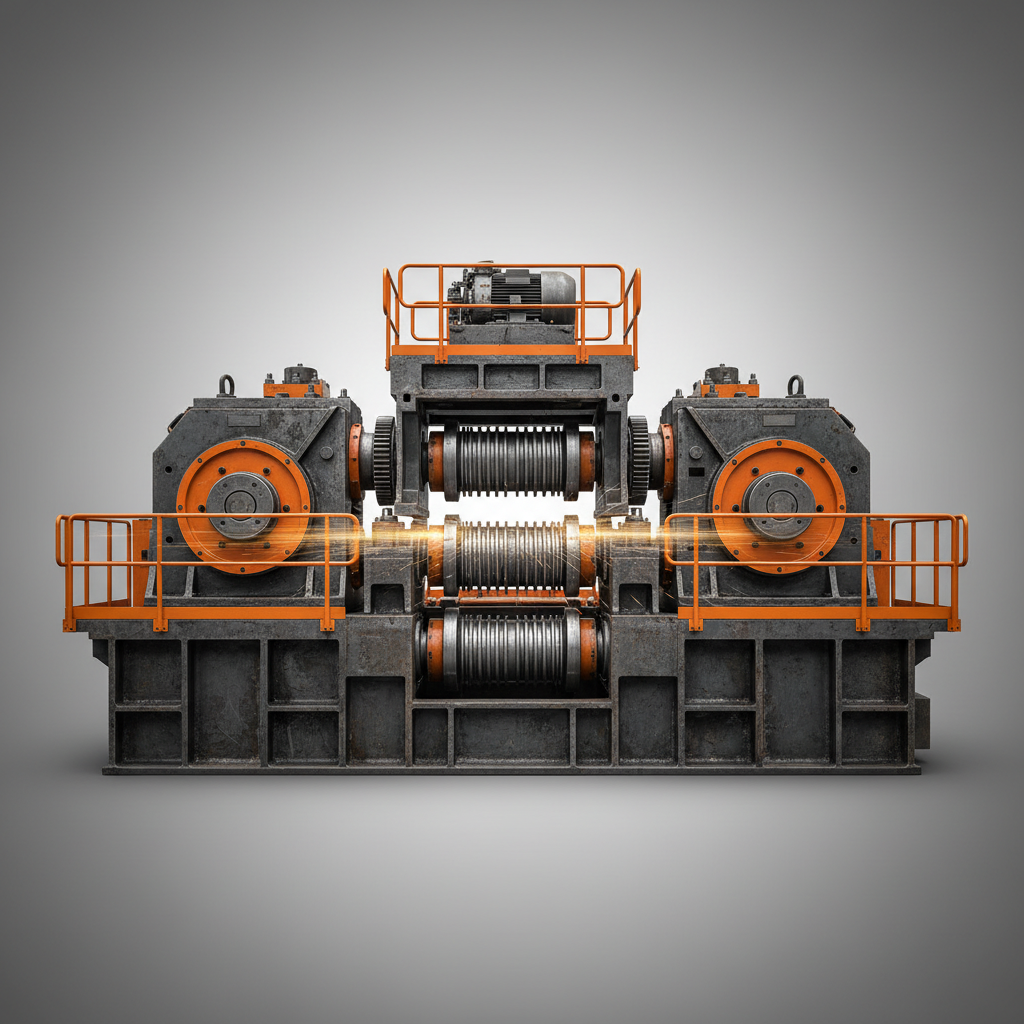
Selecting a chinese top mill manufacturer involves more than comparing price tags; it requires a deep dive into the intersection of metallurgical precision and automation intelligence. For global steel and non-ferrous producers, the ability to maintain constant rolling force and elongation is the thin line between high-yield precision and costly material waste.
The modern rolling landscape is shifting toward integrated turn-key projects where mechanical robustness is secondary to the electrical control systems and HMI capabilities. As production lines scale, the demand for sophisticated AGC (Automatic Gauge Control) systems and soft-rolling modes has transformed how industry leaders evaluate their equipment partners.
This analysis explores the technical benchmarks of high-end rolling machinery and provides a framework for procurement officers to distinguish between basic fabrication and true engineering excellence in the metallurgical sector.

The Evolution of High-Precision Rolling Technology in China

The trajectory of rolling mill manufacturing has moved from simple mechanical reduction to complex, software-driven ecosystems. In the early stages, the focus was on the sheer tonnage of the mill; today, the emphasis is on the fidelity of the gauge control and the reduction of downtime during seam passing.
The emergence of specialized providers like Yang Wang Li Xin, founded in 2003, signifies a shift toward research-driven engineering. By leveraging expertise from institutions like the China Top Iron & Steel Research Institute, the industry has moved toward pioneering "first-of-their-kind" systems, such as the first hydraulic AGC systems for ribbon steel and fully automated medium-width tandem mills.
This evolution is characterized by the integration of Siemens and ABB electrical controls, ensuring that the mechanical hardware is governed by high-speed digital inverters and PLC systems that can react in milliseconds to changes in material tension or thickness.
Critical Automation Pillars for Modern Mill Stability
Precision in rolling is governed by four primary automatic controls: AFC (Constant Rolling Force), AEC (Constant Elongation), APC (Position Control), and ATC (Constant Tension). Without the synergy of these four, achieving a consistent flatness across a wide strip is nearly impossible.
One of the most significant advancements is the "Soft Rolling Mode." Traditional mills often required the rolls to open completely when a welded seam passed to avoid surface damage. Modern high-end systems now allow seams to pass directly if the rolling force is below 2000KN, or automatically reduce the force to 2000KN, protecting the roll surface while maintaining process continuity.
Furthermore, the adoption of servo-controlled bending roll systems allows for real-time flatness adjustments, mitigating the common industry struggle with "edge drop" or "center buckle" in high-precision cold rolling.
Strategic Applications Across Diverse Metal Substrates
Rolling technology is not one-size-fits-all. The requirements for processing Carbon Steel (such as DX51D or SPCC) differ fundamentally from those for Silicon Steel or non-ferrous alloys like Aluminum and Copper. Each material possesses a unique work-hardening rate and thermal conductivity.
In Tandem Cold Rolling Mills (TCM) and Reversing Mills (RCM), the focus is on achieving precise gauge reduction across multiple passes. Conversely, Skin Pass Mills and Temper Mills are utilized for surface finishing and internal stress relief, where the interaction between the roll and the strip is focused on mechanical properties rather than dimensional reduction.
Specialized Cladding Rolling Mills handle the complex task of bonding dissimilar metals, requiring immense pressure and precise temperature control to ensure a metallurgical bond without compromising the structural integrity of the base layers.
Analyzing Operational Performance and Control Accuracy
Operational efficiency in a rolling mill is measured by the stability of the AGC system and the reduction of "off-gauge" material. A high-performance system should minimize the variance between the target thickness and the actual output across the entire strip width.
When comparing standard industry benchmarks with advanced automated systems, the difference is most evident in the "recover time" after a disturbance (such as a seam pass) and the precision of the rolling force control.
chinese top mill manufacturer Performance Metrics
The data indicates that integrating digital inverter speed control and PLC-based automation significantly enhances the consistency of elongation and tension, reducing the reliance on manual operator adjustments and lowering the overall scrap rate.
Procurement Framework for Turn-Key Rolling Projects
Procuring a rolling line is a high-stakes capital investment. The "turn-key" approach is preferred because it integrates consultation, design, manufacturing, and commissioning under one roof, reducing the risk of interface failures between the mechanical and electrical vendors.
Buyers must evaluate the provider's track record in "first-of-their-kind" research. For example, a manufacturer that has successfully implemented the first 5000KN double-stand skin pass mill in China possesses a depth of R&D that exceeds standard assemblers.
Key evaluation factors include the availability of revamping services and the reliability of spare parts. A mill is only as good as its maintenance cycle, and having a partner who can provide high-pressure servo stations and hydraulic spare parts is critical for long-term uptime.
Future Trajectories in Intelligent Metallurgical Equipment
The next frontier in rolling mills is the shift from "automatic" to "autonomous." While current systems use HMI to collect and display data, the future likely involves AI-driven predictive maintenance that can anticipate roll wear before it affects the strip quality.
We are seeing a move toward more flexible lines that can handle a wider variety of "Green" steels and high-strength alloys. This requires mills that can switch between different rolling modes—such as wet and dry skin passing—with minimal downtime and automatic calibration.
The integration of more advanced servo controls in bending systems could further reduce the need for manual intervention, potentially leading to "lights-out" operation for standard rolling cycles in the coming decade.
Evaluating Solution Types for Cold Rolling Production
Depending on the production goal—whether it is high-volume commodity steel or specialized thin-gauge alloys—the choice of mill architecture is paramount. The table below outlines the primary solution types and their operational characteristics.
Understanding these trade-offs allows plant managers to align their equipment investment with their actual material throughput and quality requirements.
| Solution Type | Primary Application | Technical Core | Operational Focus |
|---|---|---|---|
| Tandem Cold Mill (TCM) | High-volume strip production | Multi-stand sequential rolling | Throughput & Gauge Consistency |
| Reversing Mill (RCM) | Flexible, small-batch production | Bidirectional strip movement | Versatility & Material Variety |
| Skin Pass Mill | Surface finishing & stress relief | Low reduction rolling | Surface Quality & Flatness |
| Cladding Rolling Mill | Multi-layer bonded metals | High-pressure bonding | Interfacial Bond Strength |
| Temper Mill | Mechanical property adjustment | Controlled elongation | Hardness & Yield Strength |
| Pickling-TCM Line | Integrated cleaning & rolling | Chemical + Mechanical process | Process Integration Efficiency |
For those looking to optimize existing operations, revamping services focusing on the upgrade of AGC systems and electrical controls often provide a higher ROI than full line replacement.
Frequently Asked Questions
Conclusion
The search for a chinese top mill manufacturer ultimately leads to a balance between proven mechanical reliability and forward-thinking automation. As the metallurgical industry demands tighter tolerances and higher efficiency, the integration of digital controls and specialized rolling modes becomes the primary differentiator of success.
For organizations evaluating the establishment of new production lines or the optimization of existing assets, reviewing the technical capabilities and project references available through www.bjywlx.com can provide the necessary insights to ensure a high-ROI investment in rolling technology.