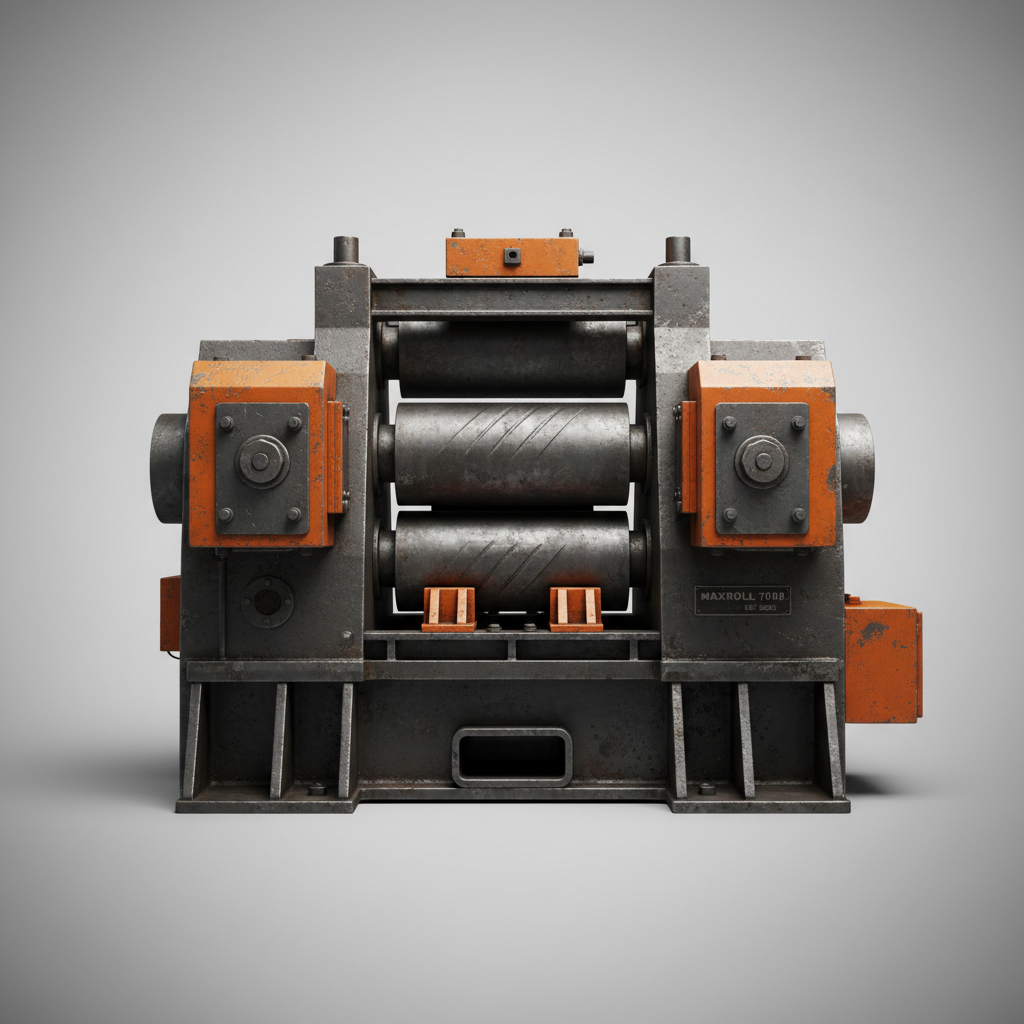
The global construction industry heavily relies on steel reinforcement, and TMT (Thermo-Mechanically Treated) bars are a crucial component. Understanding the cost of tmt bar rolling mill is vital for developers, infrastructure planners, and governments alike. This knowledge impacts project feasibility, budget allocation, and ultimately, the pace of development worldwide.
Fluctuations in raw material prices (iron ore, steel scrap), energy costs, labor expenses, and technological advancements all contribute to the dynamic cost structure of TMT bar rolling mills. This necessitates a constant evaluation of market trends and operational efficiencies. The demand for durable and cost-effective infrastructure drives ongoing innovation in mill technology and production processes, further influencing the cost of tmt bar rolling mill.
A comprehensive understanding of the factors influencing the cost of tmt bar rolling mill allows stakeholders to make informed decisions, optimize investments, and ensure the sustainable development of infrastructure projects globally. This includes selecting the right mill technology, negotiating favorable raw material contracts, and implementing efficient operational strategies.
Introduction to cost of tmt bar rolling mill
The cost of tmt bar rolling mill represents the total investment required to establish and operate a facility capable of transforming raw materials into high-quality TMT steel bars. This encompasses not only the initial capital expenditure but also ongoing operational costs such as energy consumption, labor, maintenance, and raw material procurement. Understanding these components is essential for potential investors and mill operators.
A well-managed and efficient TMT bar rolling mill can significantly contribute to a nation's infrastructure development, offering a reliable supply of steel reinforcement for construction projects. Minimizing the cost of tmt bar rolling mill without compromising quality allows for greater project affordability and broader accessibility to essential infrastructure.
Defining cost of tmt bar rolling mill
The cost of tmt bar rolling mill is a complex metric that encapsulates all expenses associated with the entire lifecycle of the mill, from initial setup to ongoing operation. This includes land acquisition, building construction, machinery purchase and installation, utilities, raw material sourcing (primarily iron ore and steel scrap), labor costs, maintenance, and administrative overhead.
Essentially, it represents the investment required to convert raw steel billets into finished TMT bars that meet stringent quality standards. The cost varies considerably depending on the chosen technology, production capacity, automation level, and geographical location. It’s vital to differentiate between capital expenditure (CAPEX) – the upfront investment – and operational expenditure (OPEX) – the ongoing costs.
Understanding the scope of the cost of tmt bar rolling mill is essential for feasibility studies, financial modeling, and making informed investment decisions. A detailed cost breakdown provides transparency and allows for accurate budgeting and profitability analysis.
Key Components of the cost of tmt bar rolling mill
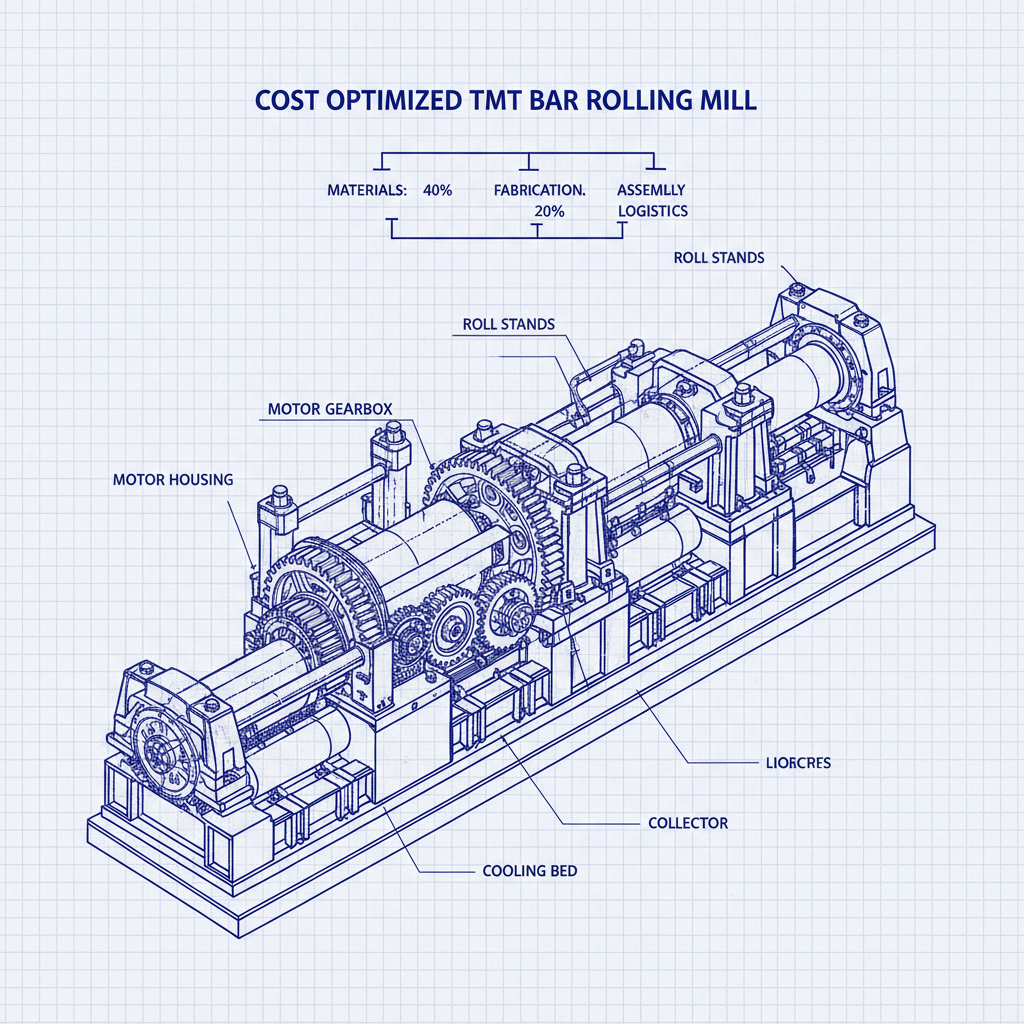
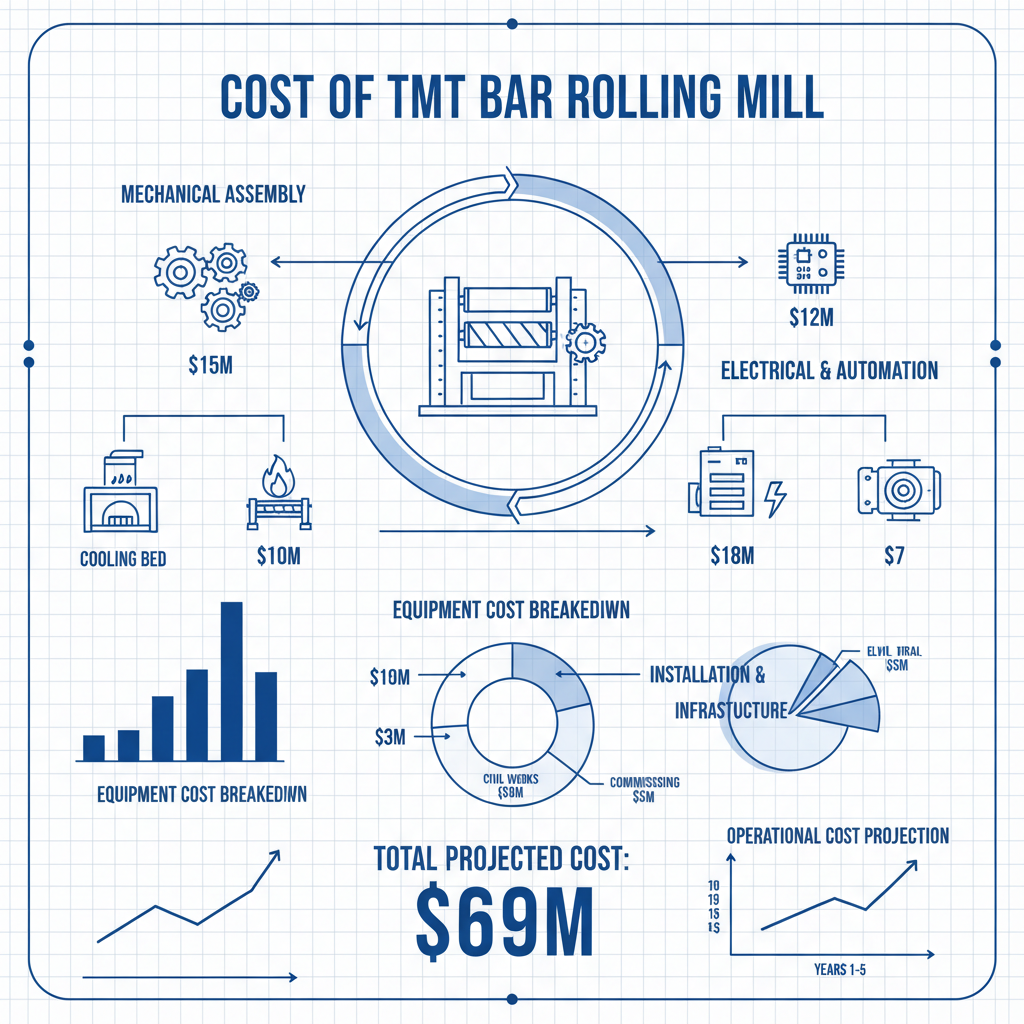
The cost of tmt bar rolling mill can be broken down into several key components. First, there's the cost of land and civil construction, which includes preparing the site, constructing buildings, and providing necessary infrastructure. Then comes the cost of machinery, the largest single expense, encompassing reheating furnaces, rolling mills, cooling systems, cutting and bundling lines, and quality control equipment.
Raw material costs, particularly iron ore and steel scrap, represent a substantial ongoing expense. Labor costs, including skilled operators, maintenance personnel, and administrative staff, also contribute significantly. Finally, operational costs such as energy (electricity, gas), water, and maintenance must be factored in.
Accurately assessing each of these components is crucial for developing a realistic budget and projecting profitability. These components are interconnected; for instance, advanced automation can reduce labor costs but increases the initial machinery investment.
Factors Affecting cost of tmt bar rolling mill
Several factors significantly influence the cost of tmt bar rolling mill. Raw material prices, particularly those of iron ore and steel scrap, are highly volatile and directly impact production costs. Energy costs (electricity and gas) are another major factor, especially for energy-intensive processes like reheating furnaces. Global steel prices and market demand will affect investment decisions.
Cost Breakdown of TMT Bar Rolling Mill
Global Applications and cost of tmt bar rolling mill
TMT bar rolling mills are crucial for construction in rapidly developing economies like India, China, and Southeast Asian nations, where large-scale infrastructure projects are underway. The cost of tmt bar rolling mill in these regions can be influenced by local labor costs, land prices, and import duties on machinery. Developing countries often prioritize affordable TMT bars for housing and public works projects.
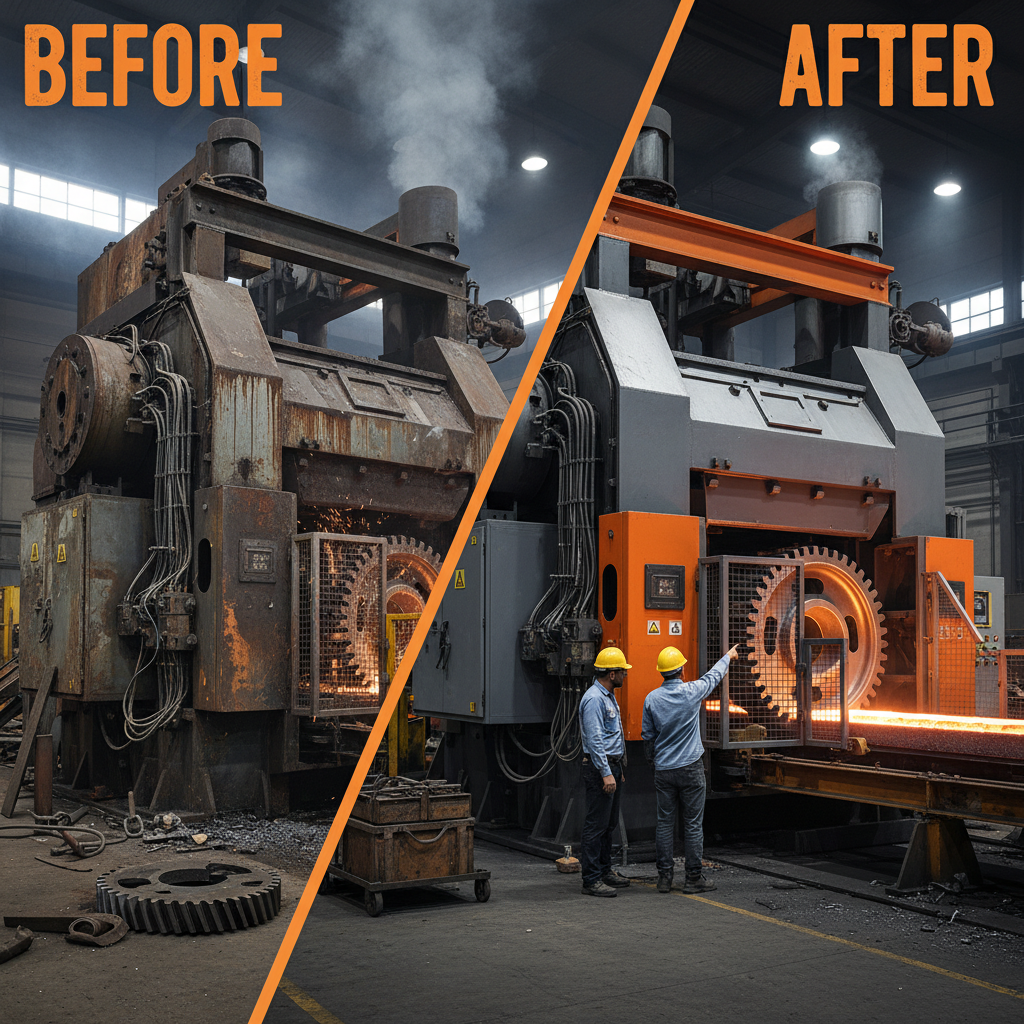
In established economies like the United States and Europe, existing mills are often upgraded with newer, more efficient technologies to reduce costs and improve product quality. The demand for high-strength, corrosion-resistant TMT bars is increasing in these regions for specialized applications like bridges, high-rise buildings, and coastal infrastructure.
Advantages and Value of Optimized cost of tmt bar rolling mill
Optimizing the cost of tmt bar rolling mill yields several advantages. Lower production costs translate to more competitive pricing, increasing market share and profitability. Efficient mills can offer TMT bars at a lower price point, making infrastructure projects more affordable for governments and developers.
Furthermore, a focus on cost optimization often drives innovation in process efficiency and resource utilization, leading to reduced environmental impact and enhanced sustainability. Investing in energy-efficient technologies and waste reduction strategies can significantly lower operating costs and improve the mill’s overall environmental footprint.
Future Trends and cost of tmt bar rolling mill
The future of the cost of tmt bar rolling mill will be shaped by several trends. Automation and digitalization, including the use of AI-powered process control systems, will play a crucial role in optimizing efficiency and reducing labor costs. The integration of Industry 4.0 technologies, such as predictive maintenance and real-time data analytics, will further enhance operational performance.
A growing emphasis on sustainability will drive the adoption of eco-friendly technologies, such as electric arc furnaces powered by renewable energy sources. The use of recycled steel scrap as a primary raw material will also become increasingly prevalent, reducing reliance on virgin iron ore and lowering the carbon footprint.
Summary of Future Trends Affecting cost of tmt bar rolling mill
| Trend |
Impact on cost of tmt bar rolling mill |
Implementation Difficulty (1-10) |
Long-Term ROI (1-10) |
| Automation & Robotics |
Reduced labor costs, increased efficiency |
7 |
8 |
| Digitalization & AI |
Predictive maintenance, optimized processes |
6 |
9 |
| Renewable Energy Integration |
Lower energy costs, reduced carbon footprint |
5 |
7 |
| Increased Scrap Usage |
Reduced raw material costs |
3 |
6 |
| Advanced Cooling Systems |
Improved TMT bar quality, reduced energy consumption |
4 |
7 |
| Supply Chain Optimization |
Reduced logistics costs, improved raw material availability |
6 |
8 |
FAQS
Several factors contribute to rising costs, including fluctuations in iron ore and steel scrap prices, increasing energy costs, and the need for technological upgrades to meet stricter quality standards. Global supply chain disruptions and labor market dynamics also play a significant role. Efficient resource management and strategic sourcing are critical to mitigating these increases.
While automation involves a significant initial investment, it ultimately reduces long-term operational costs. Automation minimizes labor requirements, improves production efficiency, enhances product quality, and reduces waste. The long-term return on investment (ROI) is typically substantial, making automation a key strategy for cost optimization.
The payback period for a new TMT bar rolling mill investment varies depending on several factors, including production capacity, market demand, raw material prices, and operational efficiency. Typically, payback periods range from 5 to 10 years, but efficient mills with strong market positions can achieve faster returns.
Implementing energy-efficient technologies, such as optimized reheating furnaces, variable frequency drives (VFDs) on motors, and waste heat recovery systems, can significantly reduce energy consumption. Regularly maintaining equipment, improving insulation, and utilizing renewable energy sources are also effective strategies.
Raw material costs constitute a major portion of the overall cost of tmt bar rolling mill. Establishing long-term contracts with reliable suppliers, exploring alternative raw material sources (e.g., increased scrap usage), and implementing efficient inventory management practices can help control costs.
Increasingly stringent environmental regulations often require mills to invest in pollution control equipment and adopt sustainable practices, which can increase capital and operational costs. Compliance with safety standards and labor laws also contributes to the overall cost. However, these investments can also enhance the mill’s reputation and long-term sustainability.
Conclusion
In conclusion, the cost of tmt bar rolling mill is a multifaceted consideration encompassing capital expenditure, operational expenses, and a dynamic range of influencing factors. Successfully managing these costs requires a holistic approach that integrates technological innovation, efficient resource utilization, strategic sourcing, and a commitment to sustainability. Understanding these nuances is paramount for ensuring profitability and competitiveness in the global steel market.
Looking ahead, the future of TMT bar rolling mills will be defined by automation, digitalization, and a growing emphasis on environmental responsibility. Investing in these areas will not only reduce costs but also position mills for long-term success, enabling them to meet the ever-increasing demand for high-quality, sustainable steel reinforcement for infrastructure development worldwide. For more information on establishing or upgrading a TMT bar rolling mill, visit our website: www.bjywlx.com