Comprehensive Guide to AGC Controllers and Their Applications in Modern Systems
Understanding the AGC Controller: A Comprehensive Guide
The AGC controller, or Automatic Gain Control controller, is a critical component in a wide range of applications, from telecommunications to industrial processes. This article provides a detailed overview of AGC controllers, their functions, applications, and the benefits of choosing a high-quality solution. We’ll delve into how these controllers optimize signal strength and enhance system performance. Understanding AGC controllers is essential for anyone involved in designing, maintaining, or operating systems that rely on consistent signal levels.

What is an AGC Controller and How Does it Work?
An AGC controller automatically adjusts the gain of an electronic amplifier to maintain a consistent output signal level, despite variations in the input signal amplitude. This is achieved through a feedback loop that monitors the output signal and adjusts the amplifier's gain accordingly. When the input signal is weak, the AGC increases the gain, and when the input signal is strong, the AGC reduces the gain. This dynamic adjustment prevents signal clipping and distortion, ensuring optimal performance. The core principle is to maintain a stable output level, improving clarity and reliability in communication and measurement systems. The AGC controller is essential for maintaining signal integrity in fluctuating environments.
Key Benefits: Prevents signal clipping and distortion, ensures optimal signal levels, improves clarity and reliability, and dynamically adjusts to fluctuating input signals.
Applications of AGC Controllers
AGC controllers find applications in numerous industries. In telecommunications, they are vital for maintaining signal strength in radio receivers and transmitters, ensuring clear communication. Industrial automation utilizes AGC to manage sensor signals, providing accurate and reliable data for process control. Medical imaging relies on AGC to optimize image quality by adjusting signal gain. Furthermore, AGC controllers are used in audio processing, broadcast equipment, and radar systems. Essentially, any application requiring consistent signal levels benefits from the use of an AGC controller. The versatility of these controllers makes them indispensable across a broad spectrum of technologies.
Common Applications:
• Telecommunications (Radio, Cellular)
• Industrial Automation (Process Control)
• Medical Imaging (Ultrasound, MRI)
• Audio Processing (Mixing Consoles, Amplifiers)
AGC Controller Types: A Comparative Analysis
There are several types of AGC controllers, each suited for specific applications. Linear AGC offers a predictable gain adjustment but can be less efficient. Logarithmic AGC provides a wider dynamic range and better handling of large signal variations. Digital AGC utilizes digital signal processing for precise control and advanced features. The choice depends on factors like signal dynamics, accuracy requirements, and cost considerations. Choosing the right AGC controller is crucial for optimal system performance.
Key Considerations When Selecting an AGC Controller
When choosing an AGC controller, consider the input signal frequency range, dynamic range requirements, accuracy specifications, and environmental conditions. Also important is the controller's response time and its ability to handle signal distortion. Compatibility with existing systems and the availability of technical support are also key factors. Investing in a high-quality controller from a reputable manufacturer ensures reliability and long-term performance. Careful selection minimizes downtime and maximizes system efficiency.
Benefits of Choosing BJYWLX AGC Controllers
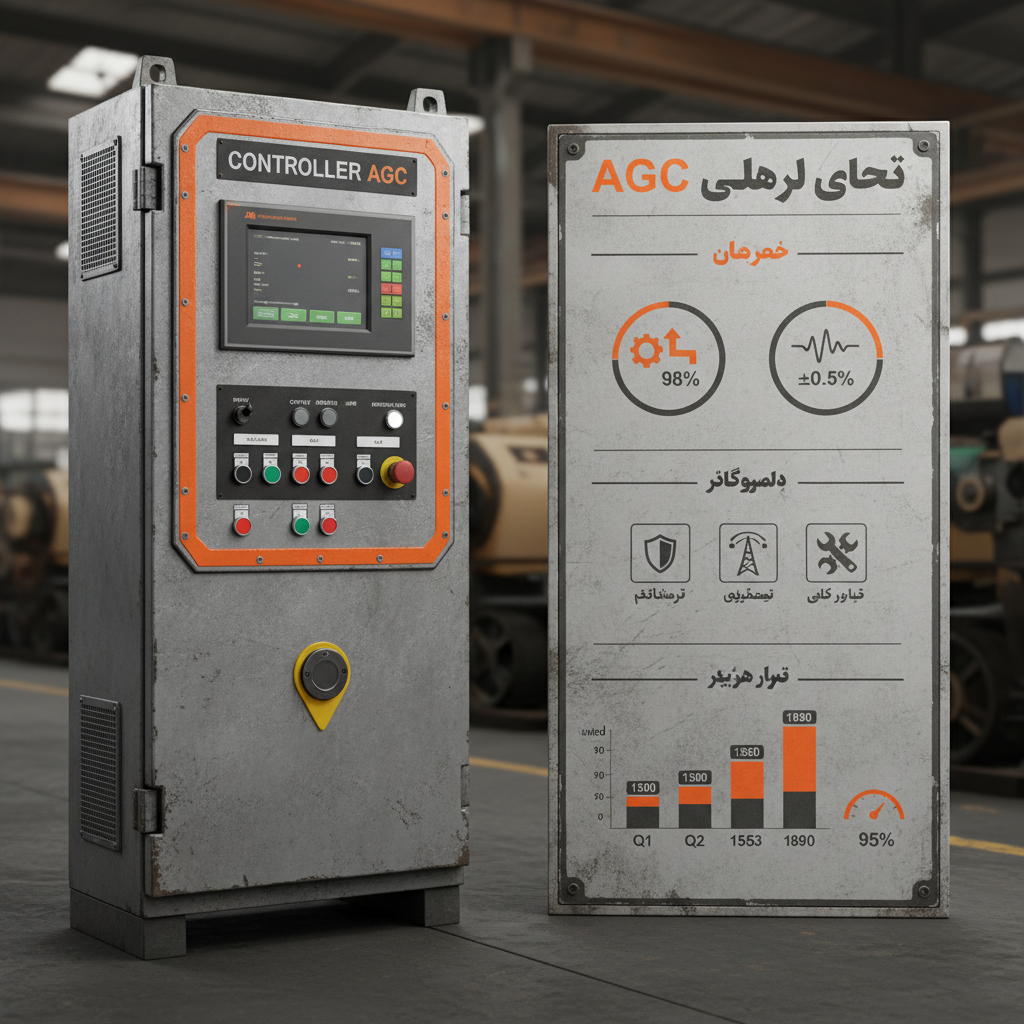
BJYWLX offers a comprehensive range of high-performance AGC controllers designed to meet diverse application requirements. Our controllers feature precise gain control, wide dynamic range, and excellent stability. We provide tailored solutions with robust construction, ensuring long-lasting reliability in challenging environments. With dedicated technical support and competitive pricing, BJYWLX is your trusted partner for AGC controller solutions. Explore our AGC controller product line today!
Conclusion: Optimize Your Signals with BJYWLX AGC Controllers
The BJYWLX AGC controller offers a superior solution for maintaining optimal signal levels across a multitude of applications. With our commitment to quality, performance, and customer support, you can trust BJYWLX to deliver the right AGC controller for your needs. Invest in a reliable solution for consistent, clear, and efficient signal management.
Frequently Asked Questions (FAQs)
What is the typical response time of a BJYWLX AGC controller?
The response time of a BJYWLX AGC controller varies depending on the specific model and configuration, but generally ranges from a few microseconds to milliseconds. This rapid response time ensures minimal signal distortion and accurate gain adjustment, even with rapidly changing input signals. The precise response time is detailed in the datasheet for each controller model. We design our controllers to react swiftly and effectively to dynamic signal variations, guaranteeing optimal performance in demanding applications.
What input signal levels can a BJYWLX AGC controller handle?
BJYWLX AGC controllers are designed to handle a wide range of input signal levels, typically from millivolts to several volts. The specific input range varies depending on the controller model. Our controllers have a high dynamic range, allowing them to process both weak and strong signals effectively. We offer models optimized for different applications, ensuring compatibility with various signal sources. Detailed input level specifications are available in the product datasheets.
Do BJYWLX AGC controllers require any special calibration?
Most BJYWLX AGC controllers are factory calibrated and require minimal or no user calibration. However, for critical applications or specific requirements, optional calibration procedures are available. Our controllers are designed for ease of use and reliable performance right out of the box. We provide comprehensive documentation and support to assist with any calibration needs. For applications requiring the highest degree of precision, our support team can assist with custom calibration protocols.
-
Ship Multi-Project Equipment on the Lantern FestivalNewsMar.03,2026
-
YWLX Deep Dives into Cladding Line with Dubai ClientNewsDec.22,2025
-
1450mm 6-Hi Reversing Mill Goes Live in BangladeshNewsOct.28,2025
-
Sep. 3rd Parade: Carry Forward and Press OnNewsSep.03,2025
-
Indian Clients Visit YWLX to Inspect Skin-pass MillNewsJun.22,2025
-
Full- throttle! YWLX's Intense Production During May DayNewsMay.01,2025
-
YWLX Participated in the 2025 Chinese GAP Program Review ConferenceNewsApr.17,2025