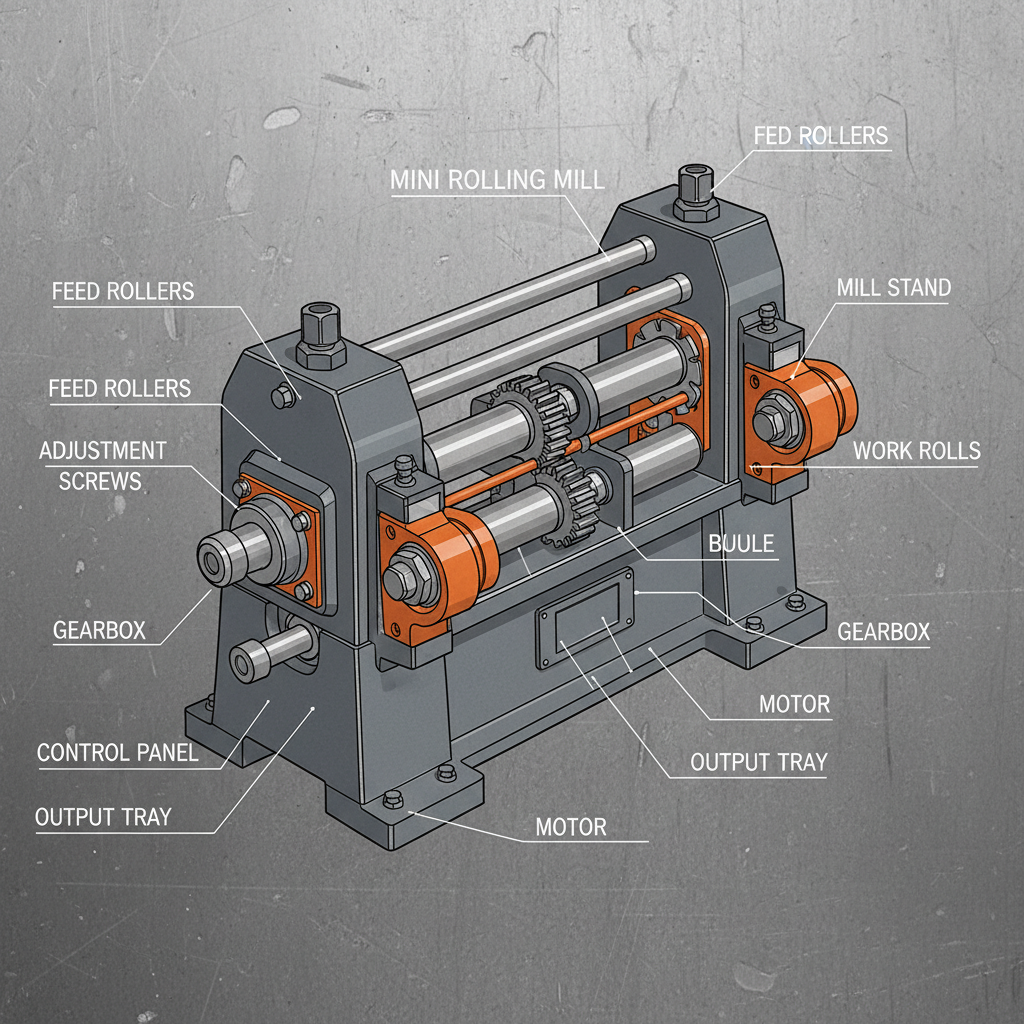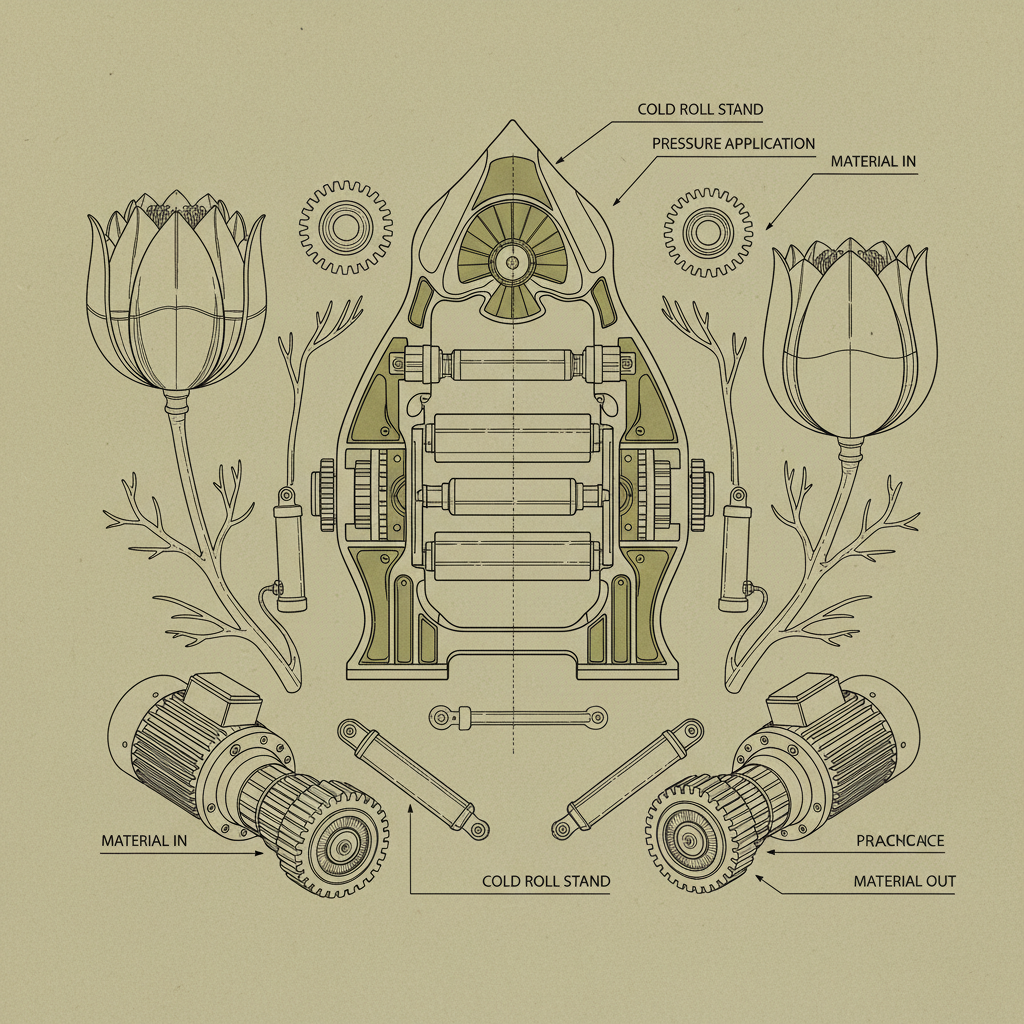
Achieving dimensional precision in the production of bars, rods, and sections requires more than just raw power; it demands a sophisticated orchestration of thermal management and mechanical pressure. The engineering behind a modern long product rolling mill is centered on the ability to control the deformation process across multiple stands to ensure consistent cross-sectional geometry.
As metallurgical requirements shift toward higher strength-to-weight ratios and tighter tolerances, the industry is moving away from manual adjustments toward fully integrated automation. This transition is driven by the need to reduce scale loss, optimize energy consumption, and eliminate the human error associated with traditional rolling schedules.
Understanding the technical interplay between hydraulic gauge control and digital speed synchronization is essential for any facility looking to upgrade its throughput. By integrating a high-performance long product rolling mill, operators can transition from basic shaping to precision metallurgical engineering.

The Mechanics of Long Product Deformation

Long product rolling focuses on the continuous reduction of a bloom or billet into a final shape, such as a rail, bar, or wire rod. Unlike sheet rolling, the primary challenge here is maintaining the axial symmetry and preventing "buckling" or "cobbles" during the high-reduction phases of the process.
The process relies on the precise calculation of the roll gap and the application of specific pressure profiles. By managing the relationship between the roll diameter, the speed of the material, and the temperature of the steel, engineers can control the grain structure and final mechanical properties of the product.
Critical Components for Dimensional Stability
Stability in a rolling line is predicated on the rigidity of the mill stands and the responsiveness of the drive systems. High-precision mills utilize PLC-based automation to coordinate the movement of the product across multiple stands, ensuring that the tension remains within a narrow window to avoid surface defects.
A critical element is the implementation of segmented cooling control. By applying water quenching or targeted cooling to specific sections of the roll, operators can prevent overheating and thermal expansion, which would otherwise lead to gauge drift and inconsistent product diameters.
Furthermore, the use of positive and negative bending rolls for working rolls, alongside the shifting of intermediate rolls, allows for the correction of "crown" and "bow" in the final product. This mechanical flexibility is what separates a basic mill from a professional-grade production line.
Advanced Control Logic in Modern Mills
The intelligence of a modern rolling mill resides in its Automatic Gauge Control (AGC) system. This system does not merely react to errors but predicts them using a combination of forward and feedback loops. By monitoring the mass flow and the actual exit gauge, the system makes millisecond adjustments to the roll gap.
Effective AGC integration must combine forward modeling—calculating the required gap based on incoming material—with real-time feedback and mass flow monitoring to eliminate cumulative errors across the production line.
Complementing the AGC is the digital DC speed control. This allows for seamless synchronization between the uncoiler, the rolling stands, and the cooling beds. When speed is coupled with closed-loop tension control, the risk of mechanical failure and material waste is drastically reduced.
Quantifying Automation Efficiency
Transitioning from manual or semi-automated systems to fully digital controls yields measurable improvements in operational stability. The impact is most visible in the reduction of "off-gauge" material and the speed of roll changes. Modern systems utilize motor-driven worm and worm gear mechanisms for rapid adjustment of rolling levels.
By analyzing the relative performance of different control methodologies, it becomes clear that the integration of fault diagnosis and alarm systems significantly reduces unplanned downtime, allowing for a more predictable production cycle.
Figure 2. Relative Impact of Control Systems on Mill Performance
Operational Scenarios and Material Compatibility
The flexibility of a rolling mill is defined by its ability to handle diverse materials without extensive re-tooling. In a typical industrial setting, a mill may need to switch between carbon steels, stainless alloys, and non-ferrous metals like copper or aluminum. Each material possesses a unique flow stress and thermal conductivity, requiring tailored AGC parameters.
For manufacturers evaluating their current capacity, the ability to integrate spare parts and revamping services is crucial. Upgrading a reversing mill or a tandem line with updated hydraulic systems can allow a facility to process higher-grade silicon steels or specialized non-ferrous alloys without replacing the entire mechanical structure.
Emerging Trends in Rolling Technology
The industry is currently witnessing a shift toward "smart mills" where data collection and storage are used for predictive maintenance. By analyzing the vibrations and temperature profiles of the working rolls in real-time, systems can now predict roll wear before it affects the product gauge.
Another significant trend is the integration of water quenching devices directly into the rolling sequence. This allows for the precise control of the cooling rate, enabling the production of products with differentiated mechanical properties along their length, such as tempered-and-quenched bars.
Looking forward, the synergy between mechanical rigidity and electronic precision will be the primary differentiator. The ability to execute quick roll changes and rapid level adjustments via motorization will become a standard requirement for maintaining competitiveness in a high-mix, low-volume market.
Selection Framework for Mill Upgrades
When deciding between a full line replacement and a revamping service, operators must assess the remaining fatigue life of the mill stands and the compatibility of the existing electrical infrastructure. A revamping approach often focuses on replacing the AGC systems and upgrading the PLC controls to bring the mill up to modern standards.
The trade-off typically involves balancing the immediate capital expenditure against the long-term gains in productivity. While a new tandem cold mill offers maximum efficiency, upgrading a reversing mill with digital speed control can often meet the needs of mid-sized production runs with significantly less investment.
The following framework provides a conceptual comparison of different upgrade paths based on typical metallurgical requirements and operational goals.
| Upgrade Path | Primary Focus | Technical Complexity | Relative Suitability |
|---|---|---|---|
| Control Revamp | PLC & AGC Upgrade | Medium | Existing rigid stands |
| Mechanical Overhaul | Roll Change Systems | High | High-mix production |
| Full Line Install | Turn-key Integration | Very High | Capacity expansion |
| Hydraulic Retrofit | Gauge Control Precision | Medium | Tighter tolerance needs |
| Digitalization | Data & Diagnosis | Low | Maintenance reduction |
| Cooling Upgrade | Quenching Systems | Medium | Special alloy processing |
Questions & Answers
A reversing mill passes the material back and forth through the same stand to achieve multiple reductions, offering high flexibility for different product sizes but lower throughput. A tandem mill utilizes a series of stands in a single direction, providing significantly higher production speeds and better consistency for high-volume runs of a single product specification.
Automatic Gauge Control (AGC) minimizes dimensional variance by adjusting the roll gap in real-time. By utilizing forward and feedback loops, it compensates for factors like roll wear, thermal expansion of the stands, and variations in incoming material temperature, ensuring the final product stays within strict tolerance limits.
Priority should be given to the compatibility of hydraulic seals and the precision of the electronic control components. Because rolling mills operate under extreme pressure and temperature, the metallurgical grade of the replacement rolls and the responsiveness of the DC speed control components are critical to avoiding unplanned downtime.
Yes, but it typically requires a revamp of the cooling systems and the AGC logic. Non-ferrous materials like aluminum or copper have different flow characteristics than steel; therefore, adjusting the roll bending capabilities and the speed synchronization is necessary to prevent surface marking and ensure structural integrity.
The PLC (Programmable Logic Controller) acts as the central nervous system, coordinating the sequence of operations from the uncoiler to the final cutting stage. It manages the closed-loop control of tension, monitors fault diagnosis systems, and executes the complex algorithms required for automatic speed and gauge adjustments.
Roll bending is used to counteract the natural deflection (bowing) of the rolls under high pressure. By applying a controlled bend to the working or intermediate rolls, the mill can produce a flatter, more uniform cross-section, preventing the product from becoming thicker in the center than at the edges.
Final Thoughts
The evolution of the long product rolling mill is characterized by a transition from brute force to precision control. By integrating advanced AGC systems, digital speed synchronization, and intelligent thermal management, manufacturers can achieve unprecedented levels of consistency and efficiency.
Whether through the installation of a new turn-key line or the strategic revamping of existing assets, the goal remains the same: maximizing material yield while minimizing operational volatility. In an era of tightening specifications, the investment in automation is no longer an option but a prerequisite for industrial viability.