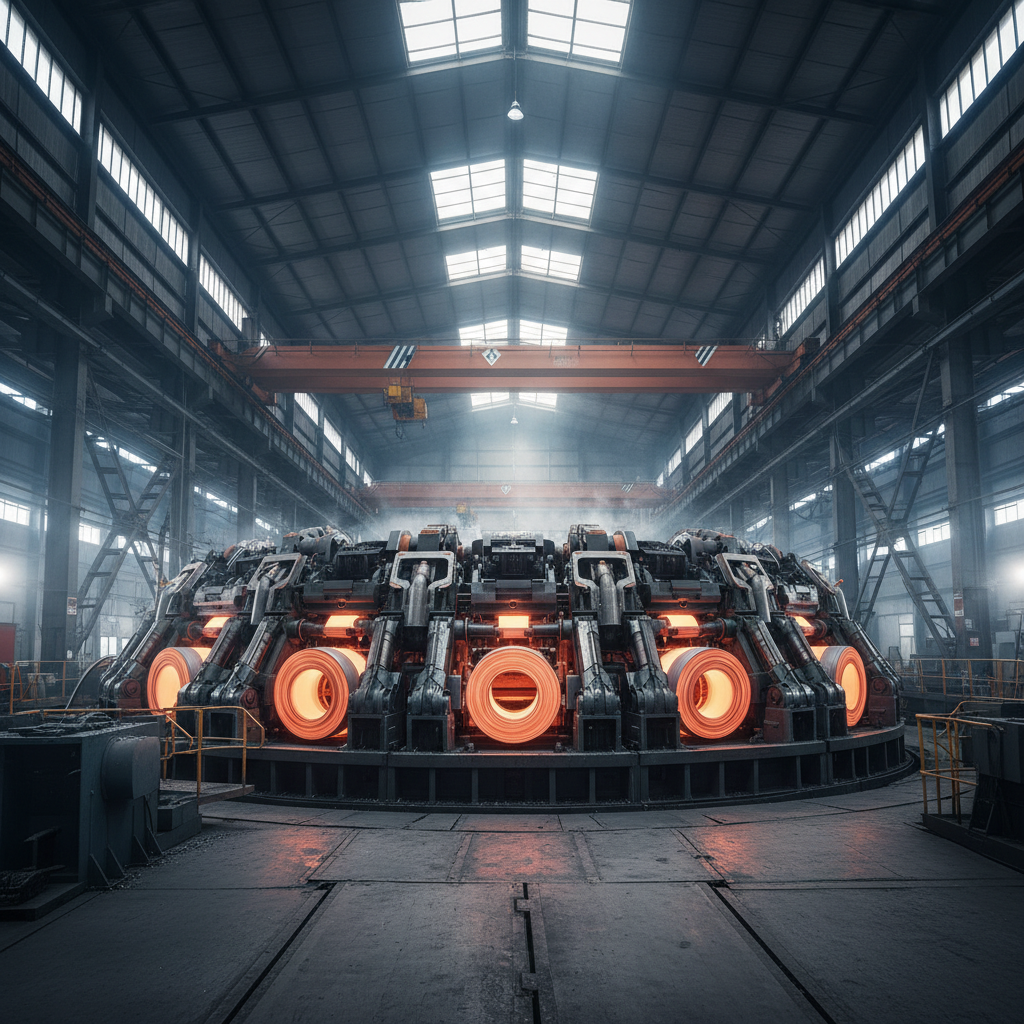
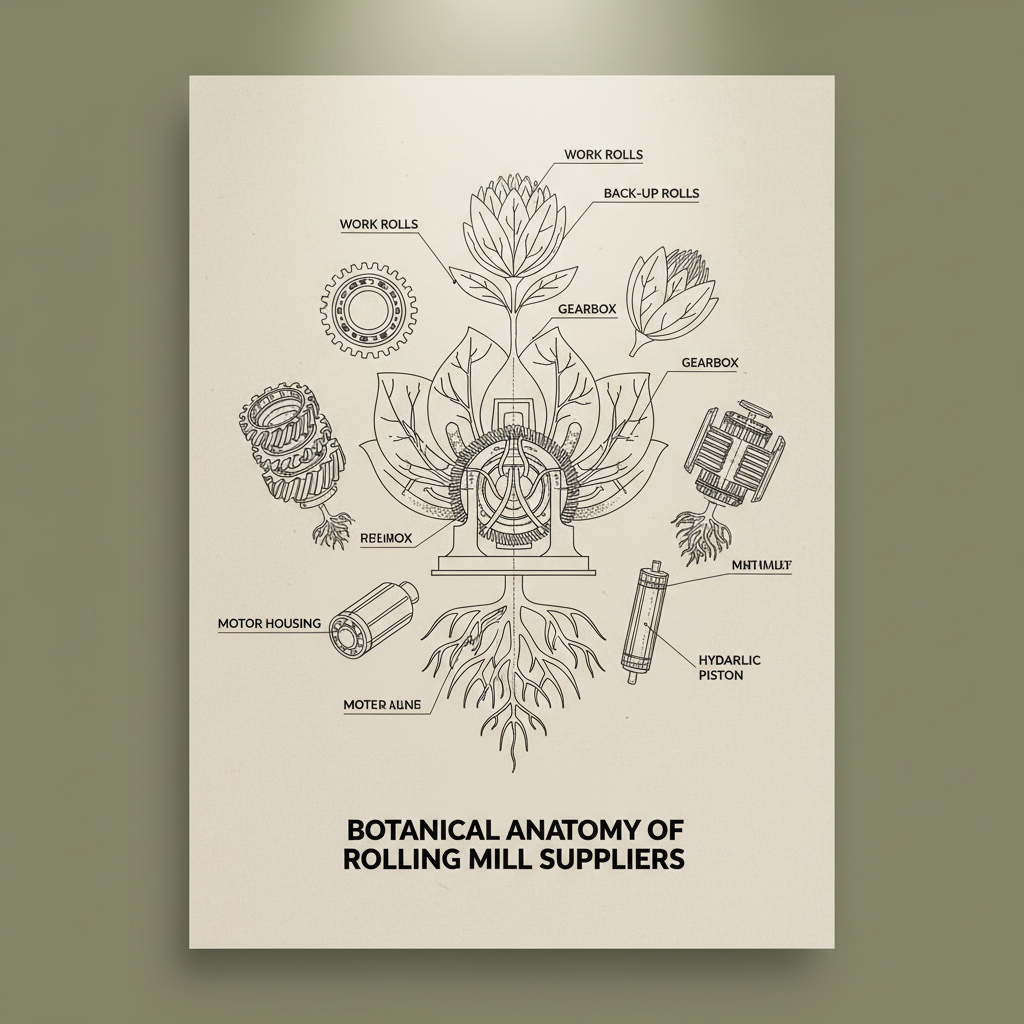
Look, rolling mills. Been around forever, right? But things are shifting. Everyone’s talking about automation, wanting bigger capacities, higher precision. Seems like every factory I visit these days, they’re either upgrading or seriously thinking about it. It’s not just about making steel faster, it's about making better steel, with less waste. And honestly, the demand from the construction and automotive sectors is just… relentless.
What’s really pushing things forward, though, is the focus on specialized alloys. Forget your basic carbon steel, everyone wants stainless, tool steel, something with specific properties. That changes everything about the rolling process, the roll materials, the cooling systems… it’s a whole different ballgame.
To be honest, you wouldn't believe the amount of shops still using outdated designs. I saw one in Jiangsu last month that was practically a museum piece. They were fighting fires just to keep it running. It makes you wonder how they're still in business.
The Current Landscape of Rolling Mills
It’s a global market, obviously. China’s still the biggest producer and consumer, but India’s really coming up fast. You’ve got Germany and Japan with their high-precision stuff, and then a lot of smaller players popping up in Southeast Asia. The UN's data shows a consistent increase in steel demand, fueled by infrastructure projects in developing countries. It's a good time to be in this business, if you can navigate the competition.
There's this constant push for efficiency, though. People don't want to just make steel, they want to make it cheaper and faster. And that's where the innovation comes in, you know? It’s about finding ways to reduce energy consumption, minimize downtime, and improve the quality of the finished product. Honestly, it’s a tough balancing act.
Common Pitfalls in Rolling Mill Design
Have you noticed how many companies skimp on the roll cooling system? It's a classic mistake. If you don’t cool the rolls properly, you're gonna get inconsistent results, and you'll be replacing those rolls way more often than you should. That adds up to a lot of money. And another thing: people underestimate the importance of proper alignment. If the rolls aren't perfectly aligned, you'll get edge defects, and you'll be fighting those all day long.
I encountered this at a factory in Hebei last time; they’d bought a cheap mill online, and the entire thing was out of whack. They spent weeks just trying to get it to produce a usable product. It’s cheaper upfront, sure, but the long-term costs are enormous.
Also, strangely, a lot of folks ignore the vibration issue. Rolling mills generate a ton of vibration, and if you don’t have proper dampening, it’s gonna wear out the components faster, and it's gonna be a noisy, unpleasant work environment. Safety too, naturally.
Materials: Beyond Just Steel
Okay, so everyone thinks about the steel itself, right? But the rolls… that’s where things get interesting. You’ve got your standard cast iron, which is cheap and good for lower-temperature applications. Then you’ve got chilled cast iron, which is harder and more wear-resistant. But for high-speed rolling or rolling of hard alloys, you need something tougher, like forged steel or even tungsten carbide. That tungsten carbide stuff… feels almost like diamond, super dense. Smells… well, it doesn’t really smell like anything.
And the bearings! Don't even get me started on the bearings. They need to be able to handle immense loads and high temperatures. Ceramic bearings are becoming more popular, they can withstand a lot more heat and wear. But they're expensive, no question about it.
We also use a lot of different alloys for the roll surfaces – nickel alloys, cobalt alloys – depending on the material being rolled and the desired finish. It’s a real science, honestly. You gotta know your materials. It is an entirely different level of knowledge than just understanding base metal properties.
Real-World Testing and Performance
Forget the lab tests. Those are useful, sure, but they don't tell you the whole story. I like to see these things run in a real-world environment, under real-world conditions. That means putting them through their paces, pushing them to their limits. We do a lot of load testing, of course, to see how much weight the mill can handle. But we also do fatigue testing, to see how it holds up over time.
And then there’s the dimensional accuracy testing. We need to make sure the mill is producing material to the correct thickness and width tolerances. We'll take samples and measure them with micrometers, calipers, all sorts of stuff. It's meticulous work.
Anyway, I think the most important test is simply… time. Run the mill for a few months, see how it performs, see what breaks down. That's when you really find out what's what.
Rolling Mill Performance Metrics
How Users Actually Employ Rolling Mills
You’d think it’s straightforward, right? Feed in metal, get out rolled metal. But it’s never that simple. I’ve seen guys trying to roll materials that the mill wasn’t designed for. Trying to force it, basically. And that usually ends badly.
Often, they're not paying enough attention to the lubrication. A dry mill is a dead mill, plain and simple. And they’re always trying to push the limits, to get a higher throughput. Which is fine, to a point, but you gotta be careful not to overstress the machine.
Advantages and Disadvantages of Modern Rolling Mills
The advantages are obvious: higher production rates, better quality control, reduced labor costs. These new mills are incredibly efficient, when they’re running right. They can produce a wide range of materials, with tight tolerances. They're capable of achieving impressive output volumes.
But there are downsides too. They’re expensive, obviously. And they require skilled operators and maintenance personnel. You can't just throw anyone in there and expect them to get it right. And if something goes wrong, it can be a real headache to diagnose and fix. It’s complex machinery.
They can be energy hogs too, if you’re not careful. You need to optimize the process, minimize waste, and use energy-efficient components. It’s a constant balancing act.
Customization Options and Case Studies
People always want something different. Last month, that small boss in Shenzhen who makes smart home devices insisted on changing the interface to , and the result was a complete disaster. The mill couldn’t handle the material flow, and it jammed constantly. He ended up having to revert back to the original design. It’s a classic case of “if it ain’t broke, don’t fix it.”
But we do get legitimate requests for customization all the time. Different roll profiles, different cooling systems, different automation features. We recently built a mill for a company that makes titanium tubes. They needed a very specific roll profile to achieve the desired tube diameter and wall thickness. It was a challenging project, but we got it done.
Another time, we had a client who needed a mill that could handle both steel and aluminum. That required a completely different set of rolls and a more versatile cooling system. It's all about understanding the customer's needs and tailoring the mill to their specific requirements.
Summary of Rolling Mill Customization Features
| Customization Type |
Complexity Level |
Estimated Cost Increase |
Typical Application |
| Roll Profile Modification |
Medium |
5-15% |
Specialty Shape Production |
| Cooling System Upgrade |
High |
15-30% |
High-Speed Rolling |
| Automation Integration |
High |
20-40% |
Increased Efficiency |
| Material Compatibility Change |
Medium-High |
10-25% |
Multi-Material Processing |
| Frame Reinforcement |
Low-Medium |
3-10% |
Heavy-Duty Applications |
| Sensor Integration (Quality Control) |
Medium |
8-18% |
Precise Measurement and Monitoring |
FAQS
Honestly? The hydraulic systems. They're complex, prone to leaks, and when they fail, they fail spectacularly. You need a good hydraulic technician on retainer, plain and simple. It's also about preventative maintenance – regular oil changes, filter replacements, pressure checks. Ignoring it is just asking for trouble.
With proper maintenance, a good mill should last at least 20-25 years. But it depends. How hard it’s used, the materials it's processing, the quality of the initial build… all those factors matter. I’ve seen mills that are 40 years old and still running strong, but they've been meticulously maintained their entire lives. And I've seen newer mills that are already showing their age after just a few years of neglect.
They focus too much on the upfront cost and not enough on the total cost of ownership. A cheap mill might seem appealing at first, but you'll end up spending more money on repairs, maintenance, and downtime in the long run. It’s a false economy. You gotta think long-term, you know?
For high-volume production, absolutely. They can significantly reduce labor costs, improve consistency, and increase throughput. But they require a higher level of technical expertise to operate and maintain. It’s not a simple plug-and-play solution. You need to have the right people in place to make it work.
Emergency stop buttons, guards on moving parts, proper ventilation, noise reduction measures… all of those are essential. You also need to make sure your operators are properly trained in safe operating procedures. And you should conduct regular safety inspections to identify and address any potential hazards.
Sometimes. It depends on the mill’s design and the materials you want to process. You might need to change the rolls, adjust the cooling system, or modify the automation settings. It's not always a straightforward process, but it's often possible with some engineering expertise.
Conclusion
So, where does all this leave us? Rolling mills are complex machines, but they’re also essential for a wide range of industries. The key to success is to choose the right mill for your specific needs, to invest in proper maintenance, and to have a skilled team in place to operate and maintain it. The market's changing fast, with a focus on automation, precision, and sustainability, so you have to stay ahead of the curve.
Ultimately, whether this thing works or not, the worker will know the moment he tightens the screw. That’s all there is to it. And if you’re looking for a reliable rolling mill, you know where to find us: www.bjywlx.com