Choosing a Skin Pass Mill: Application Fit and Specification Checks
THE BUYER'S GUIDE / SELECTION
Choosing a Skin Pass Mill: Application Fit and Specification Checks
A buyer-focused guide to choosing a skin pass mill for a galvanizing line. It covers the process goals the mill serves, the strip widths and rolling forces, the control and automation functions to check, and when this equipment may not match a project.

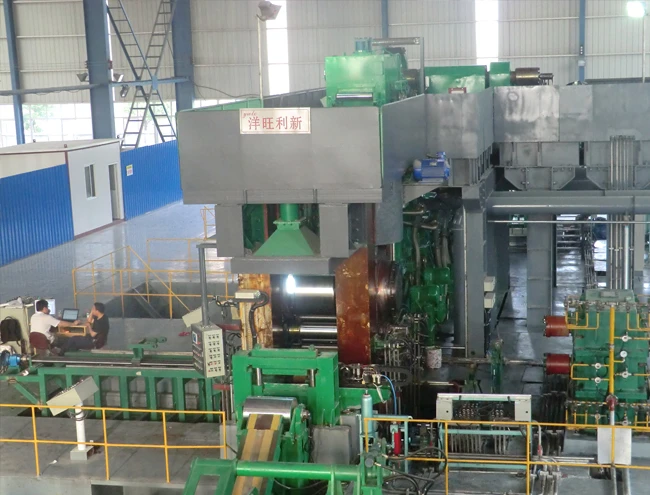
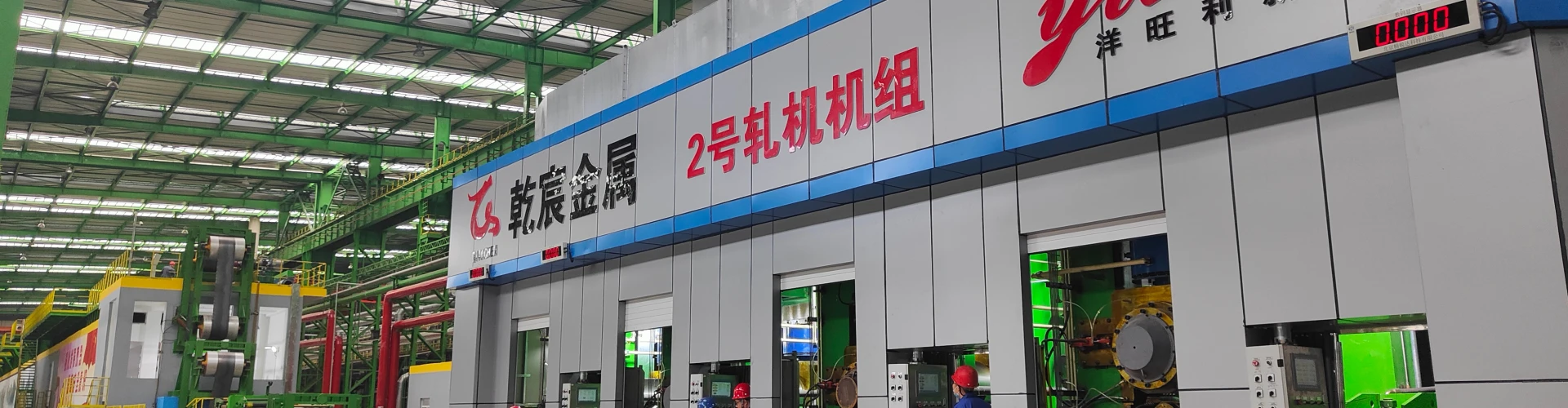
Process goal: surface roughness for later color coating, flatness improvement, and reducing or eliminating yield plateau and stretcher strains on galvanized sheet
Strip width match against documented widths such as 1800, 1680, 1550, 1450 and 1150 mm
Rolling force match against documented values such as 4000, 5000, 6000, 8000, 10000 and 12000 kN
Automatic control scope: AFC, AEC, APC and ATC, plus servo-controlled positive/negative work roll bending for flatness
Welded seam handling: quick roll gap open/recover or soft rolling mode (seam passes at or below 2000 kN without opening rolls)
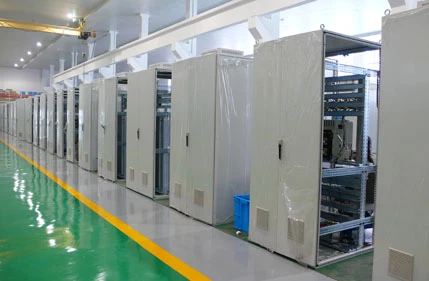
Electrical and automation platform: full digital inverter drives and PLC from Siemens or ABB, touch screen and data-storing HMI
Process mode and auxiliaries: wet or dry skin passing, high pressure water system, anti-crimping and anti-cross breaker rolls, medium pressure hydraulic and high pressure servo stations
Choosing a Skin Pass Mill: Application Fit and Specification Checks
A skin pass mill is a key unit in a galvanizing line. Before you compare quotations, confirm that the mill matches your strip, your process goals and your control requirements. This guide uses the confirmed product description of the Skin Pass Mill from Beijing Yang Wang Li Xin Sci&Tech Co.,Ltd. to set out the checks a procurement or engineering team should make. It does not cover price, lead time or certification, because no confirmed material on these is available. Confirm them directly with the company.
1. Start with the process goal
The product description lists three functions for a skin pass mill in a galvanizing line:
- Surface roughness: creating the surface roughness the galvanized sheet requires, which supports quality in a later color coating process.
- Flatness: improving the flatness of the galvanized sheet.
- Mechanical properties: improving the mechanical properties of the galvanized sheet by decreasing or eliminating the yield plateau and stretcher strains.
Write down which of these goals matter most for your product. If your line feeds a color coating process, roughness control is likely a priority. If your customers complain about stretcher strains or flatness, put elongation and flatness control at the center of the specification.
When this guide does not apply: the confirmed material describes the mill as equipment for a skin pass mill galvanizing line. If you are sourcing for a different line or process, the source material does not show that the mill fits. Ask the supplier for application-specific documentation before you go further.
2. Match strip width and rolling force
The configurations include strip widths such as 1800 mm, 1680 mm, 1550 mm, 1450 mm and 1150 mm, and rolling forces such as 4000 kN, 5000 kN, 6000 kN, 8000 kN, 10000 kN and 12000 kN.
When you write the inquiry, give:
- the maximum strip width of your line;
- the strip grades and thickness range you process;
- the rolling force or elongation your process needs.
The supplier can then say which configuration applies. Strip thickness range, line speed and roll dimensions are not in the confirmed material, so request them in writing.
3. Check the automatic control functions
The confirmed product description lists these control functions:
- AFC – automatic constant rolling force control
- AEC – automatic constant elongation control, carried out through rolling force control
- APC – automatic position control
- ATC – automatic constant tension control
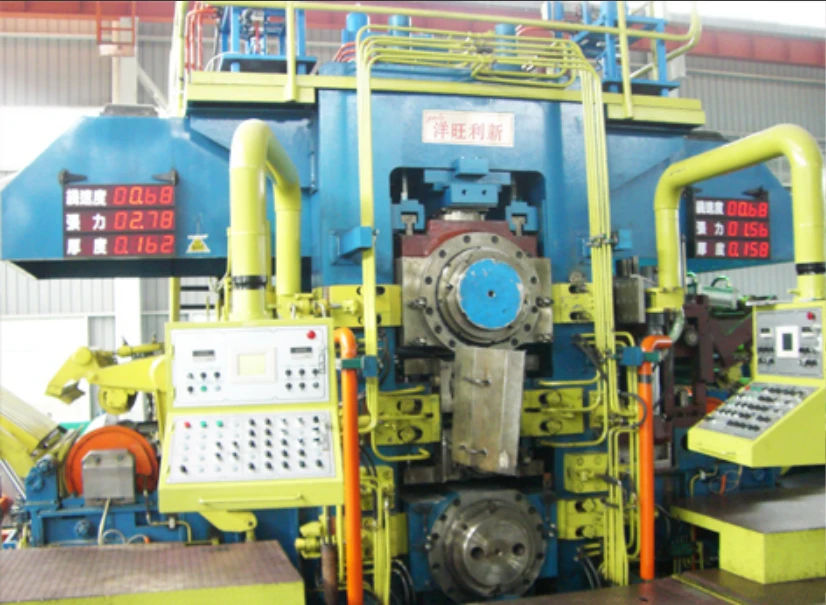
For flatness, the mill uses a positive/negative work roll bending system, and the bending roll system uses servo control. If you need consistent elongation to remove the yield plateau, ask how the AEC loop is set up and tuned for your strip grades.
4. Review welded seam handling
Welded seams pass through the skin pass mill on a continuous galvanizing line, so seam handling affects roll life and uptime. The description lists two options:
- Quick roll gap opening and recovery when the welded seam passes, plus automatic online calibration, quick online roll change and hydraulic locking.
- A soft rolling mode that lets the welded seam pass without opening the rolls. If rolling force is below 2000 kN, the seam passes directly. If rolling force is above 2000 kN, force is reduced to 2000 kN and the seam then passes without opening the rolls. The source says this mode is meant to prevent damage to the roll surface.
Ask which seam-handling mode is offered for your configuration and how it fits your welding practice.
5. Confirm the electrical and HMI scope
The description states:
- the drive control uses full digital inverter speed control with Siemens or ABB speed control devices;
- basic automation uses a Siemens or ABB PLC with a touch screen;
- an HMI collects, displays and stores mill data.
If your plant has a standard automation platform or data-integration needs, say so early. Confirm which vendor's components will be supplied and what data the HMI can export to your plant systems. The confirmed material does not state the interface details.
6. Define wet or dry skin passing and auxiliary systems
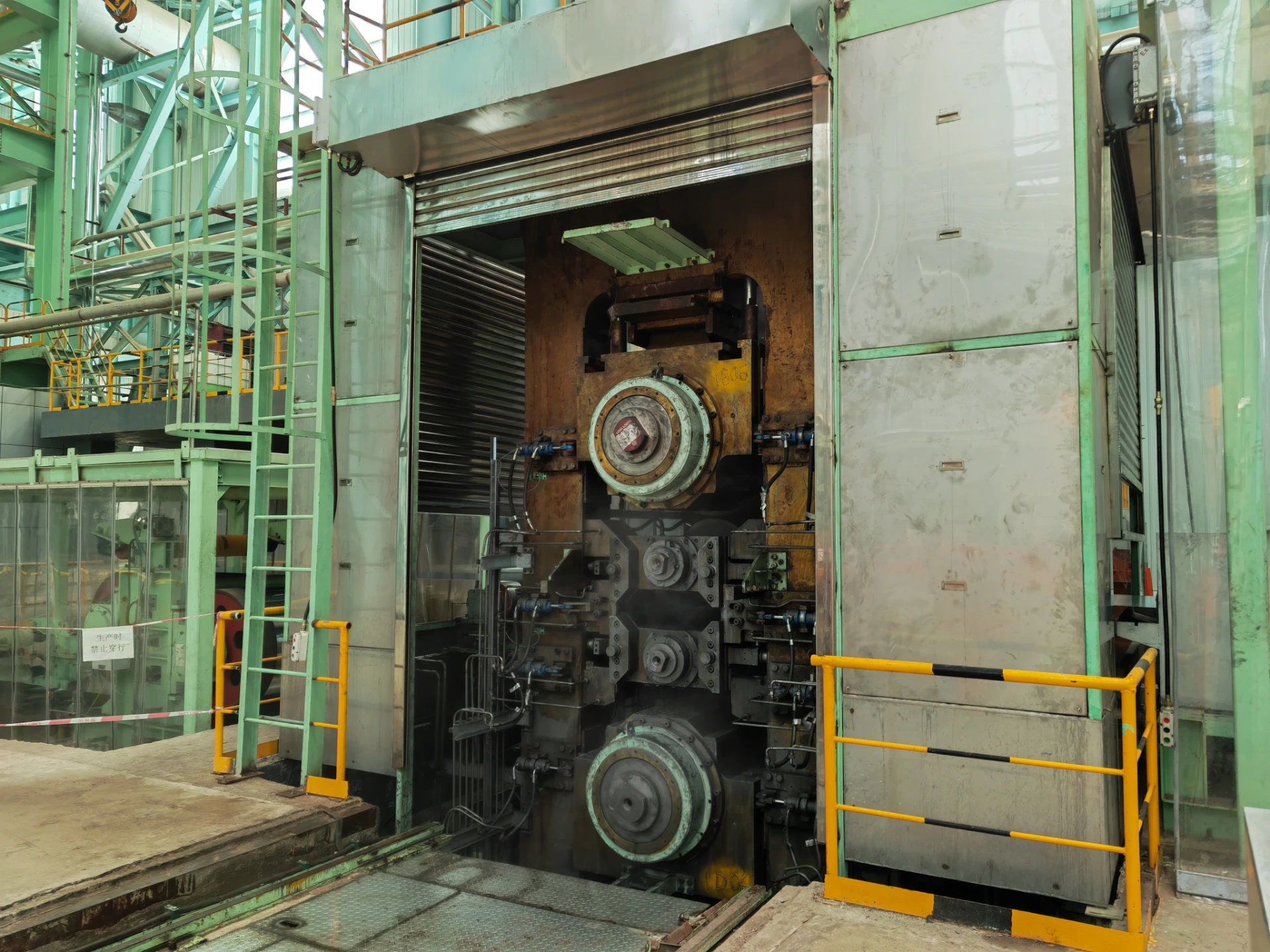
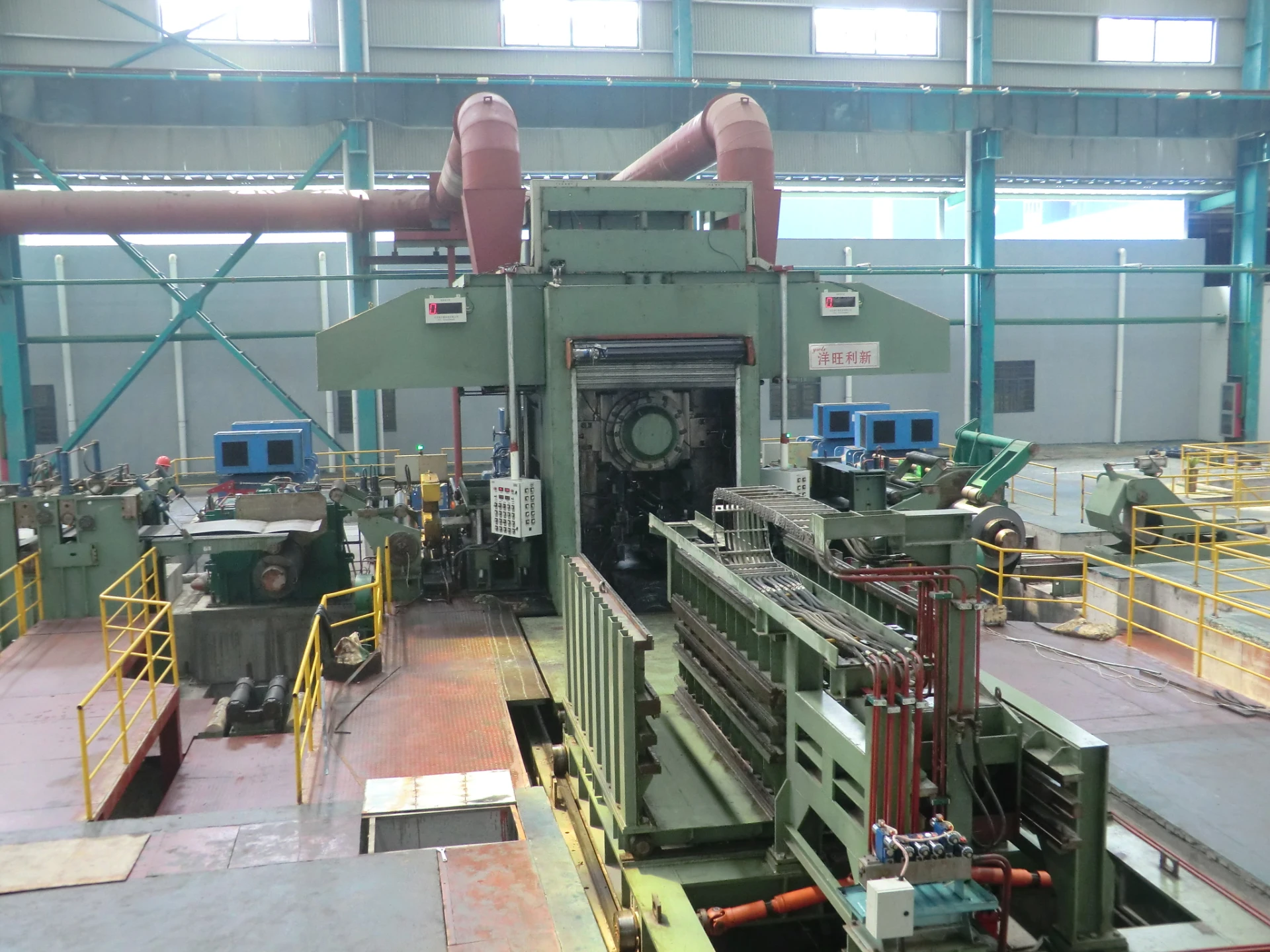
The mill can skin pass in wet or dry mode to suit process needs. It has a high pressure water system, an anti-crimping roll and an anti-cross breaker roll. The auxiliary systems include a medium pressure hydraulic station and a high pressure servo station.
Tell the supplier whether you plan to run wet or dry. Also confirm the utility needs (water, hydraulic and electrical) and the installation footprint, since the confirmed material does not give these figures.
Selection checklist
| Check | What the confirmed material states | What to confirm with the supplier |
|---|---|---|
| Application | Skin pass for a galvanizing line | Fit for your specific line and strip grades |
| Strip width | 1800 / 1680 / 1550 / 1450 / 1150 mm, etc. | Your exact maximum width |
| Rolling force | 4000–12000 kN listed values, etc. | Force needed for your elongation targets |
| Controls | AFC, AEC, APC, ATC; servo work roll bending | Tuning for your products |
| Weld seam | Quick gap open/recover; soft rolling mode at 2000 kN | Mode offered for your configuration |
| Electrics | Siemens or ABB drives and PLC, HMI | Vendor choice and data interfaces |
| Process | Wet or dry skin passing | Utility and footprint requirements |
| Commercial | Not covered in confirmed material | Price, lead time, certifications, local compliance |
Next steps
Buyers in the United States, Europe, the Middle East and Southeast Asia should also check local electrical, safety and documentation requirements with their own engineering teams. The confirmed material does not say that the mill meets any specific regional standard. For specifications, quotations and project scope, contact Beijing Yang Wang Li Xin Sci&Tech Co.,Ltd. through www.bjywlx.com.
THE PEOPLE

About the author
THE COMPANY
Beijing Yang Wang Li Xin Sci&Tech Co.,Ltd.
Visit company website ↗YOUR NEXT STEP
Bring your brief. Start a useful conversation.
Use case, specification, quantity and delivery window: make the next conversation specific.
-
Ship Multi-Project Equipment on the Lantern FestivalNewsMar.03,2026
-
YWLX Deep Dives into Cladding Line with Dubai ClientNewsDec.22,2025
-
1450mm 6-Hi Reversing Mill Goes Live in BangladeshNewsOct.28,2025
-
Sep. 3rd Parade: Carry Forward and Press OnNewsSep.03,2025
-
Indian Clients Visit YWLX to Inspect Skin-pass MillNewsJun.22,2025
-
Full- throttle! YWLX's Intense Production During May DayNewsMay.01,2025
-
YWLX Participated in the 2025 Chinese GAP Program Review ConferenceNewsApr.17,2025