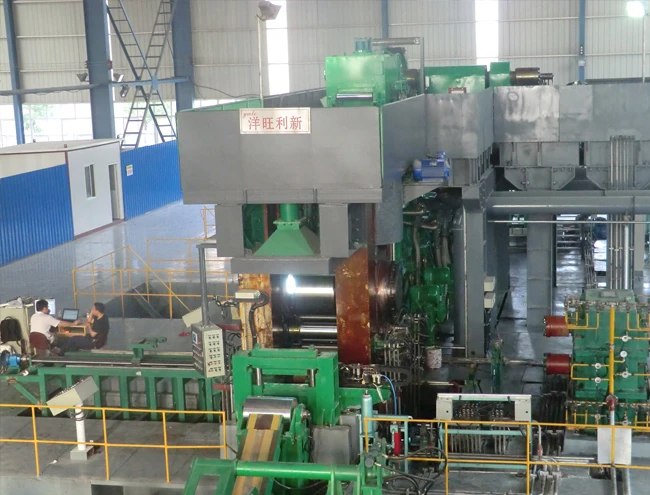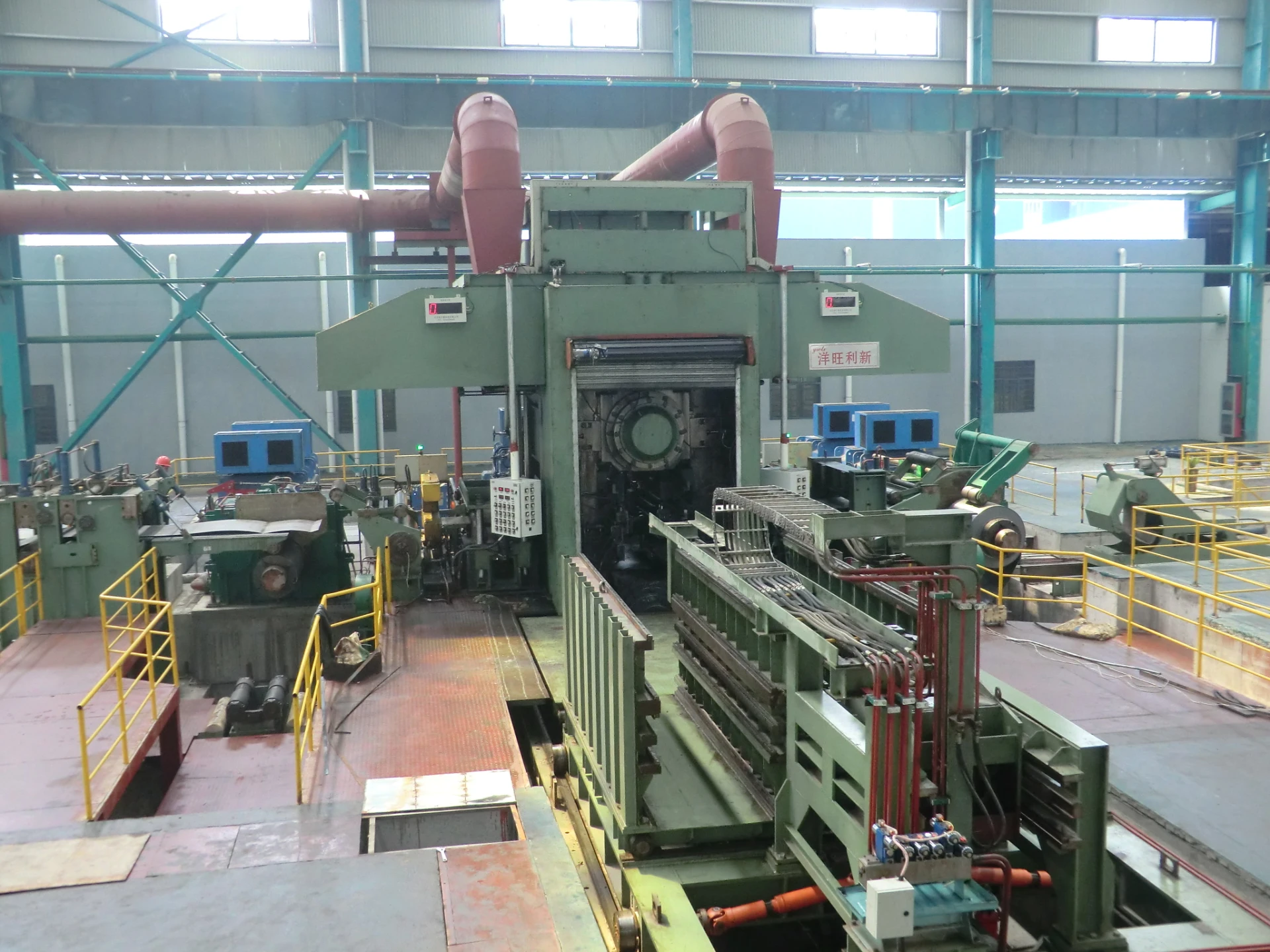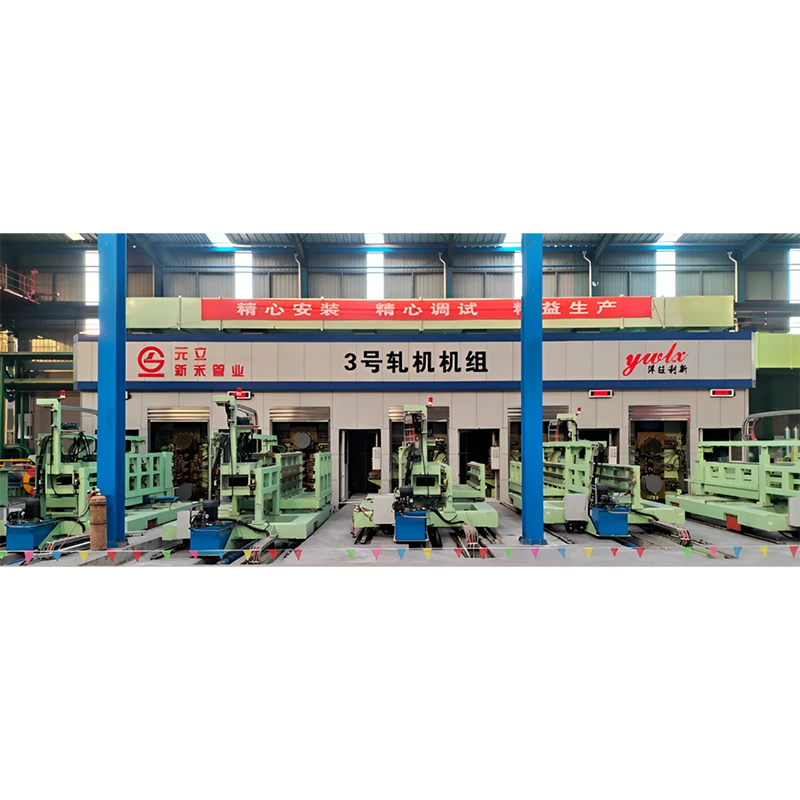
Precision HAGC Systems from a top mill manufacturer in china
Achieving micron-level precision in thin-strip rolling requires more than just robust mechanical hardware; it demands an intelligent synchronization of force and gap. The Hydraulic Automatic Gauge Control (HAGC) system is the critical engineering solution for mills facing challenges with lengthwise gauge tolerance and rolling force consistency. By integrating real-time monitoring with high-response hydraulic actuators, this system eliminates the instability common in manual or semi-automated setups.
For operators processing carbon steel, stainless steel, or non-ferrous alloys, the ability to rapidly invoke precise rolling schedules from a database reduces setup waste and maximizes throughput. Whether utilized in a reversing cold rolling mill or a tandem line, the HAGC ensures that strip thickness remains within strict tolerances, such as 0.15±0.003mm, providing the high-end surface quality and dimensional accuracy required by modern industrial standards.

The Technical Architecture of Hydraulic Automatic Gauge Control Systems
The HAGC system is a complex integration of hydraulic screwdown mechanisms, electronic sensors, and sophisticated control algorithms. At its core, the system manages the Automatic Gauge Control (AGC) and Automatic Constant Rolling Force control (AFC), ensuring that the roll gap is adjusted instantaneously to compensate for roll flattening and strip stretch. This prevents the "crown" effect and ensures a uniform gauge across the entire length of the strip.
A key technical advantage of this system is its comprehensive monitoring suite, which includes gaugemeter feedback and automatic tension gauge control. These components allow the system to operate in various closed-loop modes, such as Forward AGC and Feedback AGC. By utilizing a dedicated rolling process database, engineers can store specific parameters for different material grades, allowing the mill to switch between specifications with minimal downtime and zero manual recalculation.
Furthermore, the system incorporates a robust self-protection function, which monitors for separate force anomalies and roll gap errors. This prevents equipment damage during unexpected strip breaks or material inconsistencies, ensuring long-term operational reliability in heavy-duty metallurgical environments.

Core Operational Functions for High-Precision Strip Production
The primary objective of an HAGC system is to maintain absolute control over the roll opening position through an APC (Automatic Position Control) loop. This is achieved by executing several critical functions that work in tandem to optimize the rolling schedule:
- Multi-Mode Gauge Control: The system supports Forward, Feedback, Monitoring, Tension, Mass Flow, and Pre-setting AGC to adapt to different thickness requirements and material behaviors.
- Synchronous Roll Adjustment: It controls the synchronous movement of the rolls on both sides of the mill, eliminating tilt and ensuring the strip is corrected for flatness.
- Pressure and Force Management: Precise setting of roll gap pressure and rolling force, including the critical "roll gap zero" calibration.
- Data Acquisition: The system continuously collects, records, and prints rolling parameters, allowing for forensic analysis of production runs to further optimize future schedules.
These functions translate directly into tangible quality improvements. By managing the interaction between the roll gap and the strip tension, the HAGC system can guarantee extreme precision, specifically maintaining lengthwise gauge tolerances as tight as 0.003mm for 0.15mm strips, which is essential for high-performance silicon steel or specialized aluminum alloys.
Application Across Diverse Metallurgical Production Lines
The versatility of HAGC technology makes it applicable across a wide spectrum of cold rolling configurations. In Reversing Cold Rolling Mills (RCM), the system manages the alternating directions of the strip, adjusting the gap rapidly between passes to reach the final target gauge. In Tandem Cold Rolling Mills (TCM) and Pickling-Tandem lines (PL-TCM), the HAGC ensures consistency across multiple stands, where the output of one stand becomes the input for the next.
Beyond standard rolling, the system is indispensable for specialized lines such as:
- Skin Pass Mills: Where the HAGC provides the "soft-rolling" capability required to improve surface finish and eliminate the yield point elongation of the steel.
- Cladding Rolling Mills: Managing the different deformation rates of two bonded metals to ensure a uniform cladding thickness.
- Continuous Annealing and Galvanizing Lines (CAL/CGL): Maintaining strip flatness and tension during high-temperature processing.
The materials processed are equally diverse. From Carbon Steels (DX51D, ST12-ST15) to highly sensitive Non-Ferrous Alloys like Copper and Tinplate, the HAGC system adjusts its response logic based on the material's specific elastic modulus and flow stress, ensuring that the mechanical properties of the final product are precisely met.
Technical Performance and Gauge Tolerance Comparison
| Target Thickness | Lengthwise Tolerance | Control Mode | Primary Application |
|---|---|---|---|
| 0.15 mm | ± 0.003 mm | Closed-loop HAGC | Precision Ribbon Steel |
| 0.30 mm | ± 0.006 mm | Closed-loop HAGC | High-Grade Cold Rolled Coil |
| Medium Gauge | Application-dependent | AFC + APC | General Carbon Steel |
| Heavy Gauge | Standard Industrial | Manual/Semi-Auto | Structural Steel Plates |
| Custom Alloy | Specification-based | Database-driven AGC | Non-Ferrous Cladding |
Evaluating Supplier Capabilities for Rolling Mill Automation
When selecting a partner for rolling mill upgrades or new installations, procurement managers must look beyond the hardware. The value of an HAGC system lies in the engineering expertise behind the control logic. A provider should demonstrate a track record of integrating mechanical, electronic, and hydraulic technologies into a seamless turn-key solution. The ability to offer comprehensive consultation, design, and commissioning is what separates a component vendor from a professional system provider.
Key evaluation criteria include:
- R&D Pedigree: Does the company have experience with pioneering research, such as the development of the first hydraulic AGC systems for ribbon steel?
- Project Portfolio: A proven history of executing hundreds of projects globally across different continents ensures the supplier understands international standards and logistics.
- Customization Ability: The capacity to tailor the AGC database and hydraulic response times to specific material requirements (e.g., Silicon Steel vs. Aluminum).
- Support Infrastructure: Availability of spare parts for hydraulics and electrical components to minimize unplanned downtime.
Reliable partners, such as those with roots in major research institutes, bring a level of theoretical depth that ensures the system can be optimized for the most challenging rolling schedules, providing a competitive edge in product quality.
The Future of Intelligent Gauge Control in Steel Rolling
The industry is moving toward fully autonomous rolling mills where the HAGC system evolves from reactive control to predictive optimization. The integration of Big Data and AI will allow systems to analyze historical rolling parameters and automatically adjust the AGC logic in real-time to compensate for roll wear and thermal expansion without human intervention.
Future developments are focusing on the synergy between Tension AGC and Mass Flow AGC to achieve near-zero waste during the acceleration and deceleration phases of the rolling process. This not only improves material yield but also reduces the energy consumption of the hydraulic power units.
For global operators, the priority will be the seamless integration of these advanced controls into existing legacy lines. Upgrading a traditional mill with a modern HAGC system is the most cost-effective way to enter the high-precision market, allowing producers to compete in the automotive and electronics sectors where dimensional accuracy is non-negotiable.
Technical FAQ: Understanding HAGC and Rolling Mill Precision
What is the primary difference between AGC and AFC in a rolling mill?
AGC (Automatic Gauge Control) specifically manages the thickness of the strip by adjusting the roll gap based on thickness measurements. AFC (Automatic Constant Rolling Force control) ensures that the rolling force remains constant regardless of the strip's thickness or material variations, preventing roll deflection and ensuring structural stability.
How does HAGC improve the quality of thin-steel strips?
HAGC utilizes high-speed hydraulic actuators to make micro-adjustments to the roll gap in real-time. This eliminates the fluctuations caused by strip tension changes and roll flattening, allowing for extreme precision, such as a tolerance of ±0.003mm for 0.15mm thickness.
Can an HAGC system be retrofitted into an existing cold rolling mill?
Yes, professional providers can upgrade existing lines by replacing manual screwdown systems with hydraulic AGC actuators and integrating a modern PLC-based control system and gaugemeter monitoring.
Which materials benefit most from HAGC technology?
While carbon steel is common, HAGC is critical for materials with high sensitivity to gauge variations, such as Silicon Steel, Stainless Steel, and non-ferrous alloys like Aluminum and Copper, where precise thickness directly impacts electrical or mechanical performance.
What is the role of the rolling process database in the HAGC system?
The database stores optimized rolling schedules for different material specifications. Instead of manual setup for each new batch, the operator simply invokes the corresponding process from the database, ensuring consistency and reducing setup time.
What are the common risks when implementing AGC systems?
The main risk is the misalignment between the hydraulic response time and the strip speed. If the system is not properly tuned, it can cause "hunting" or oscillation in the strip gauge. This is why expertise in control algorithms and hydraulic tuning is essential.
Industry Technical References
- World Steel Association - Global Steel Production Standards
- ASME - Mechanical Engineering Standards for Heavy Machinery
- ISO - Quality Management and Technical Specifications
- NIST - Metrology and Measurement Accuracy Standards
Whether you are establishing a new production line or upgrading an existing mill for improved productivity, selecting a top mill manufacturer in china with deep R&D roots ensures your operation achieves the highest possible gauge precision. We invite you to share your technical requirements for a tailored HAGC solution.
Related Rolling Mill Technologies